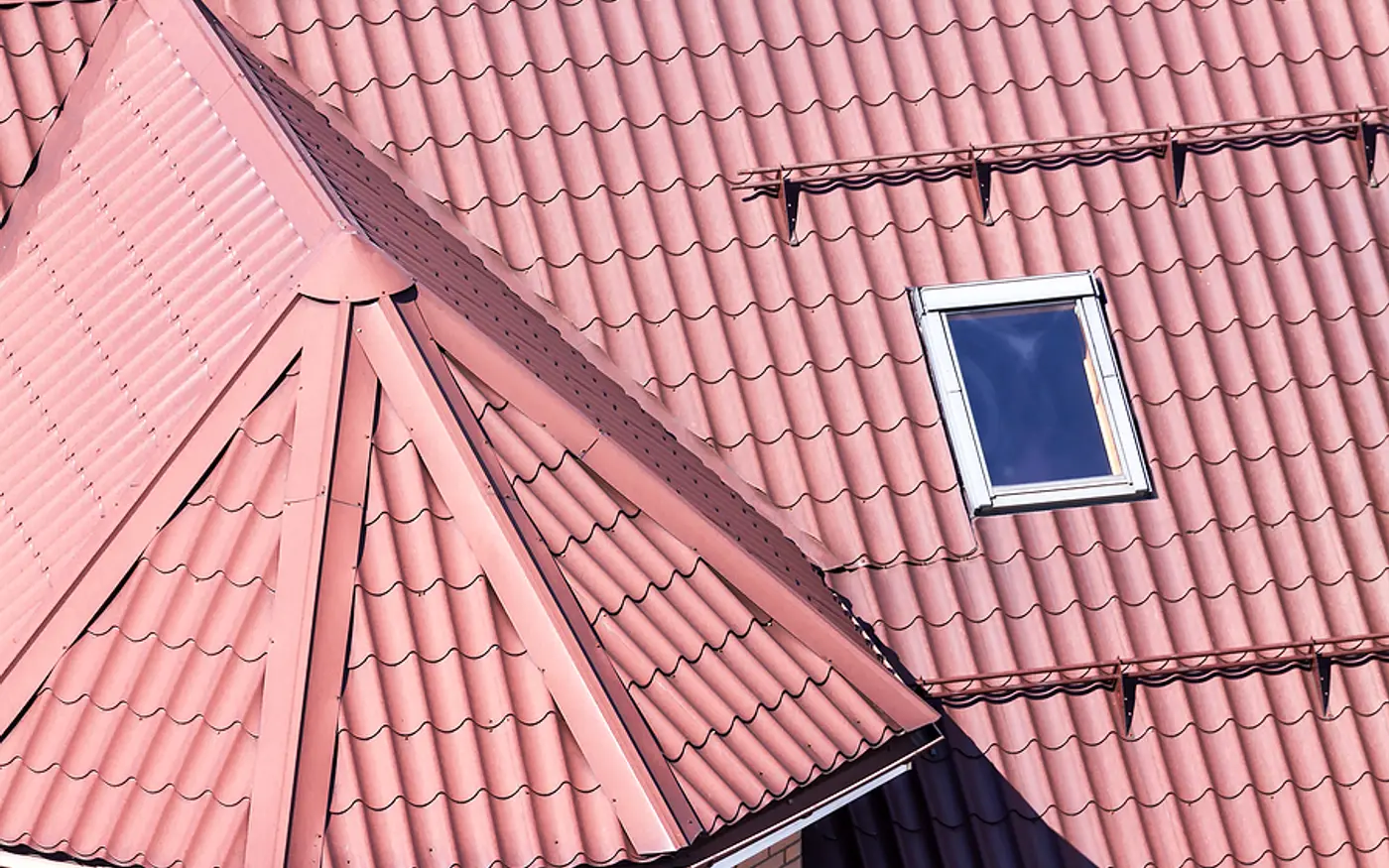
Stone-coated steel is a steel roof with a stone-granule surface adhered to it, shaped to look like shingle, shake or tile. St. Charles Roofing Designs installs it for St. Charles, Missouri homeowners who want a roof that outlasts asphalt and handles hail better. It is not hail-proof, it costs more than shingles, and it isn't right for every house, so we look at your roof first and give a free written quote.
What stone-coated steel is
Stone-coated steel starts as coated steel sheet. A layer of stone chips is adhered to the surface with an acrylic coating, and the panels are pressed into profiles that mimic dimensional shingles, wood shake or barrel and flat tile. The result reads from the street much like a traditional roof, with the texture and color variation of granules instead of the flat sheen of painted metal panels. Manufacturers include DECRA, Unified Steel and Tilcor.
It is also light. Fixr's national figures put stone-coated steel at under 2 pounds per square foot, compared with 8 to 12 pounds for concrete or clay tile, so a homeowner who wants a tile look can usually get it without reinforcing the framing. The panels install over solid decking and underlayment, and many profiles interlock along their edges.
How it differs from standing seam
Standing seam metal roofing uses long vertical panels with raised seams and concealed clips, which gives a clean, modern look and suits low slopes. Stone-coated steel uses smaller interlocking panels with a textured, granulated surface that looks like a conventional roof. The granules also hide minor dents and scuffs better than a smooth painted panel. If you like the durability of steel but want your house to look like it has shingles or shake, stone-coated steel is the option to price.
When stone-coated steel is worth considering
- Your current roof has been replaced or claimed for hail more than once, and you want a tougher roof next time.
- You want the look of shake or tile without the weight or upkeep of wood or clay.
- You plan to stay in the house long enough to get value from a longer-lived roof.
- Your insurer offers a discount for roofs rated UL 2218 Class 4 and you want to explore it.
- The old roof already has two layers, so a full tear-off is required no matter what you choose.
The honest pros and cons
| Factor | What to expect |
|---|---|
| Hail | Many products are tested to UL 2218 Class 4. Steel won't crack like a shingle, but very large hail can dent it. |
| Wind | DECRA's published warranty covers wind up to 120 mph, above the 107 mph design wind speed in the city and county codes. |
| Weight | Under 2 lb per sq ft (Fixr), far lighter than tile. |
| Cost | Fixr's 2021 national range is $7 to $15 per sq ft installed, well above asphalt. |
| Noise | Over solid decking, rain sounds much like it does on shingles. |
| Granules | Like asphalt shingles, the stone surface can shed some granules over the roof's life. |
| Installers | Fewer crews install it than asphalt, and it needs profile-specific trim and flashing. |
We go deeper on the trade-offs in our guide to stone-coated steel roofing pros, cons and cost.
Hail in St. Charles County, and where the warranty stops
Hail is the reason most people call us about stone-coated steel, so it deserves a straight answer. UL 2218 Class 4 means a 2-inch steel ball dropped from 20 feet did not crack the product in testing. DECRA's published warranty covers hail up to 2.5 inches in diameter. Those are meaningful protections, and both are well beyond what a standard shingle is built for.
But look at what has actually fallen here. According to the National Weather Service, supercells on March 14, 2024 produced hail of 3 to 3.75 inches over St. Charles County, with 3-inch hail photographed in O'Fallon. On May 26, 2024, the largest hail reported near St. Charles was 2.75 inches, with 2 to 2.5 inches elsewhere in the county. Hail of that size is larger than DECRA's 2.5-inch warranty threshold, and stones that size can dent steel panels.
Stone-coated steel handles most of the hail St. Charles County sees, but the biggest storms of 2024 dropped stones larger than its warranty covers.
So we don't call it hail-proof. What we will say is that a dented steel panel typically still sheds water, where a fractured shingle can start leaking, and that steel generally stands up to the smaller, more frequent hailstorms better than asphalt. Our St. Charles County hail history covers the major events, and the Class 4 vs. Class 3 shingle guide explains what those ratings test.
How we install stone-coated steel
- We look and photograph first. We measure, check the decking and attic where we can, and note chimneys, walls and valleys that will need custom flashing.
- We help you choose a profile and color. Shingle, shake or tile, with samples, and a check against any historic district or HOA rules that apply.
- We tear off and repair the deck. Old roofing comes off and damaged decking is replaced. The code does not allow a new roof over two or more existing layers.
- We dry in. Underlayment per the manufacturer's instructions, with self-adhered membrane in valleys, at penetrations and along walls.
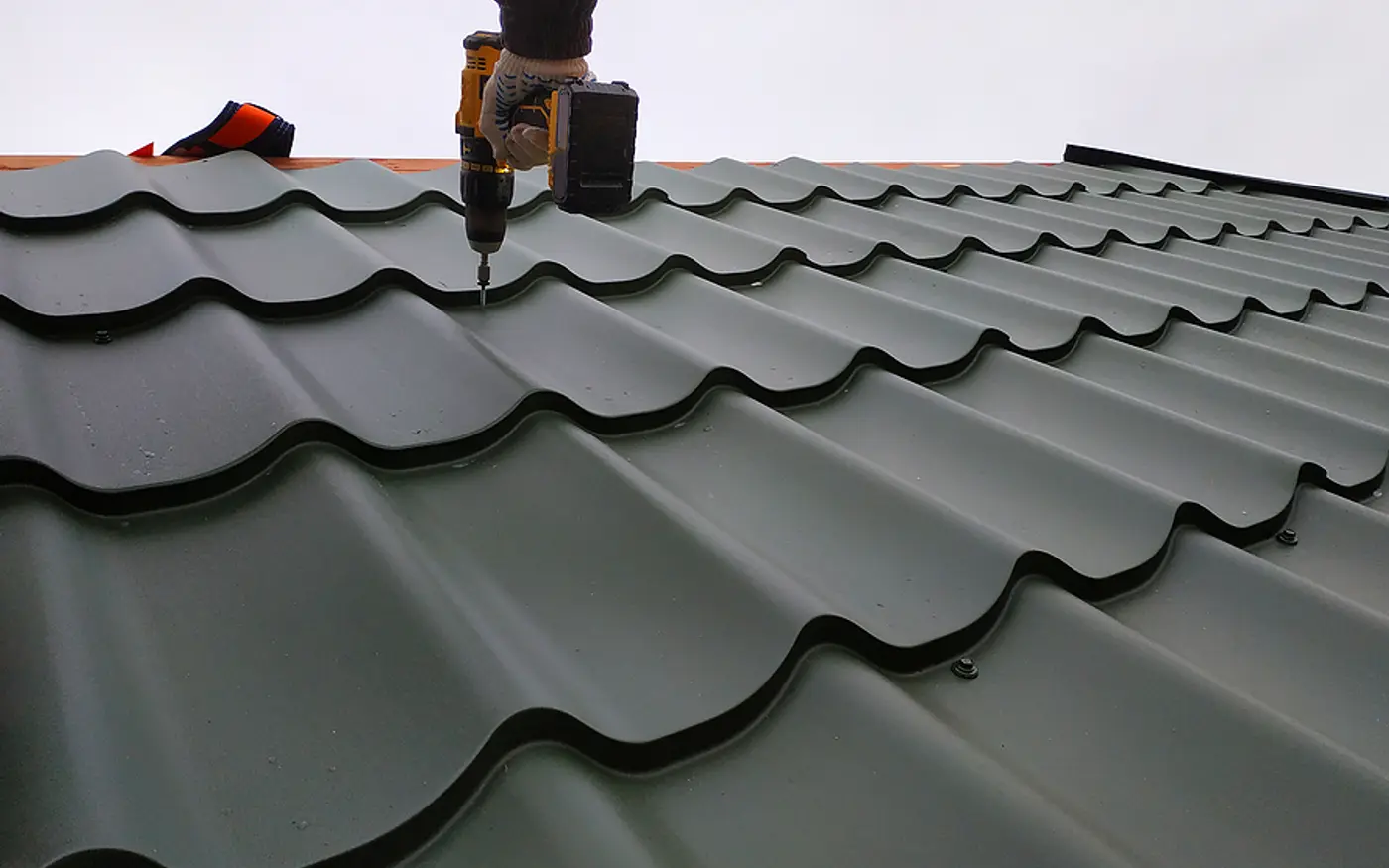
- We install panels, trim and flashing. Starter, panels, ridge and hip trim, and wall and chimney flashing, fastened to the manufacturer's pattern so the roof matches the conditions of the manufacturer's warranty.
- We clean up and walk you through it. Debris and fasteners leave with us, and you get the product information for your records.
Code details that apply here
The City of St. Charles and unincorporated St. Charles County both design for 107 mph winds and a "Severe" weathering rating; St. Peters designs for 115 mph. Neither the city nor the county requires ice barrier underlayment, but with January lows in the low 20s and regular freeze-thaw, we still put self-adhered membrane where water collects. The county's code amendments require drip edge at eaves and rakes on shingle roofs, and stone-coated systems use their own edge trim to do the same job.
Cost factors
Fixr's 2021 national figures put stone-coated steel at roughly $7 to $15 per square foot installed. That is a dated national range, not our price. What moves the number on your house:
- Roof area and pitch, plus staging on steep or tall roofs.
- Profile: shingle, shake and tile profiles use different panels and trim.
- Complexity: every valley, hip, dormer, skylight and chimney adds cut panels and flashing.
- Tear-off layers and decking repair.
We give a free written quote after we've looked at the roof, and we're happy to price architectural shingles alongside it so you can compare.
Stone-coated steel around St. Charles County
The suburbs west of the city are where we hear the most interest. In St. Peters, many homes built in the 1970s through the '90s are on their second or third roof, and the March and May 2024 storms pushed plenty of owners to ask about something tougher. Note that St. Peters' re-roofing requirements say a permit is needed when the roof covering changes to a different material; confirm with the St. Peters Building Department before work starts.
In Weldon Spring, larger homes with steep, complex roofs and brick fronts suit a shake or tile profile. Weldon Spring contracts with St. Charles County for building code enforcement; check with the city's Community Development office about any city review. In Cottleville, many newer homes still have builder-grade shingles, and owners replacing a storm-damaged first roof may want to price steel alongside shingles. Around Harvester, whether the city of St. Peters or the county handles your permit depends on the parcel.
In the city's historic districts, choose carefully. Frenchtown's guidelines do not list metal among acceptable replacement materials, and any material change generally needs a Certificate of Appropriateness. Our historic home roofing page explains that review.
Next steps
If hail is what's driving the decision, start with a roof inspection of the current roof so you know whether you're looking at a storm damage repair or a full replacement. Then we'll quote stone-coated steel and any alternatives side by side. Call (636) 242-5111, 8am to 8pm, seven days a week, or send the quote form.
Frequently Asked Questions
What is stone-coated steel roofing?
Stone-coated steel is a roof made of steel panels coated with stone chips that are adhered to the metal with an acrylic layer, then pressed into profiles that look like asphalt shingles, wood shake or clay tile. Brands include DECRA, Unified Steel and Tilcor. It installs over solid decking like other residential roofs and weighs far less than tile, under 2 pounds per square foot according to Fixr, compared with 8 to 12 pounds for tile.
Is stone-coated steel hail-proof?
No roof is hail-proof. Many stone-coated steel products are tested to UL 2218 Class 4, which means a 2-inch steel ball dropped 20 feet did not crack them, and DECRA's published warranty covers hail up to 2.5 inches. But the National Weather Service documented 3 to 3.75-inch hail over St. Charles County on March 14, 2024. Stones that size exceed that warranty threshold and can dent steel panels.
What does the DECRA warranty cover?
According to DECRA's published warranty, its stone-coated steel roofs carry a lifetime limited, non-prorated warranty that covers wind up to 120 mph and hail up to 2.5 inches, and it is transferable within 20 years. That is the manufacturer's warranty, with the manufacturer's terms and exclusions. Read the full document on DECRA's website, and keep your installation records and product paperwork with your house documents.
How much does stone-coated steel cost?
Fixr's national figures from 2021 put stone-coated steel at about $7 to $15 per square foot installed. That is a dated national range, not our pricing, and it is well above typical asphalt shingle costs. Your actual price depends on roof size, pitch, profile, the number of valleys and walls to flash, and how much tear-off and decking repair the roof needs. We give a free written quote after looking at the roof.
Is a stone-coated steel roof noisy?
Not usually. Stone-coated steel is installed over solid decking, and the stone granule layer softens the sound of rain. The loud metal roof people remember is typically bare panels screwed over open framing on a barn or shed. On a house with solid decking and an insulated attic, rain on stone-coated steel sounds much like rain on shingles.
Can I get an insurance discount for a stone-coated steel roof?
Some insurers offer premium discounts for roofs rated UL 2218 Class 3 or Class 4, and many stone-coated steel products carry a Class 4 rating. Whether you get a discount, and how much, depends on your insurer and policy. Ask your agent before you choose a product, and ask what paperwork they need to apply it. The Missouri Department of Commerce and Insurance also has a tool comparing roof coverage among major Missouri insurers.
Can stone-coated steel go on a historic home in St. Charles?
It depends on the district. Frenchtown's design guidelines list asphalt, fiberglass and wood shingles, slate and synthetic slate as replacement materials, and metal is not on that list. Changing a roof's material in any of the city's six local historic districts generally needs a Certificate of Appropriateness from the Landmarks Board. Call the city's preservation planner before choosing stone-coated steel for a historic home.