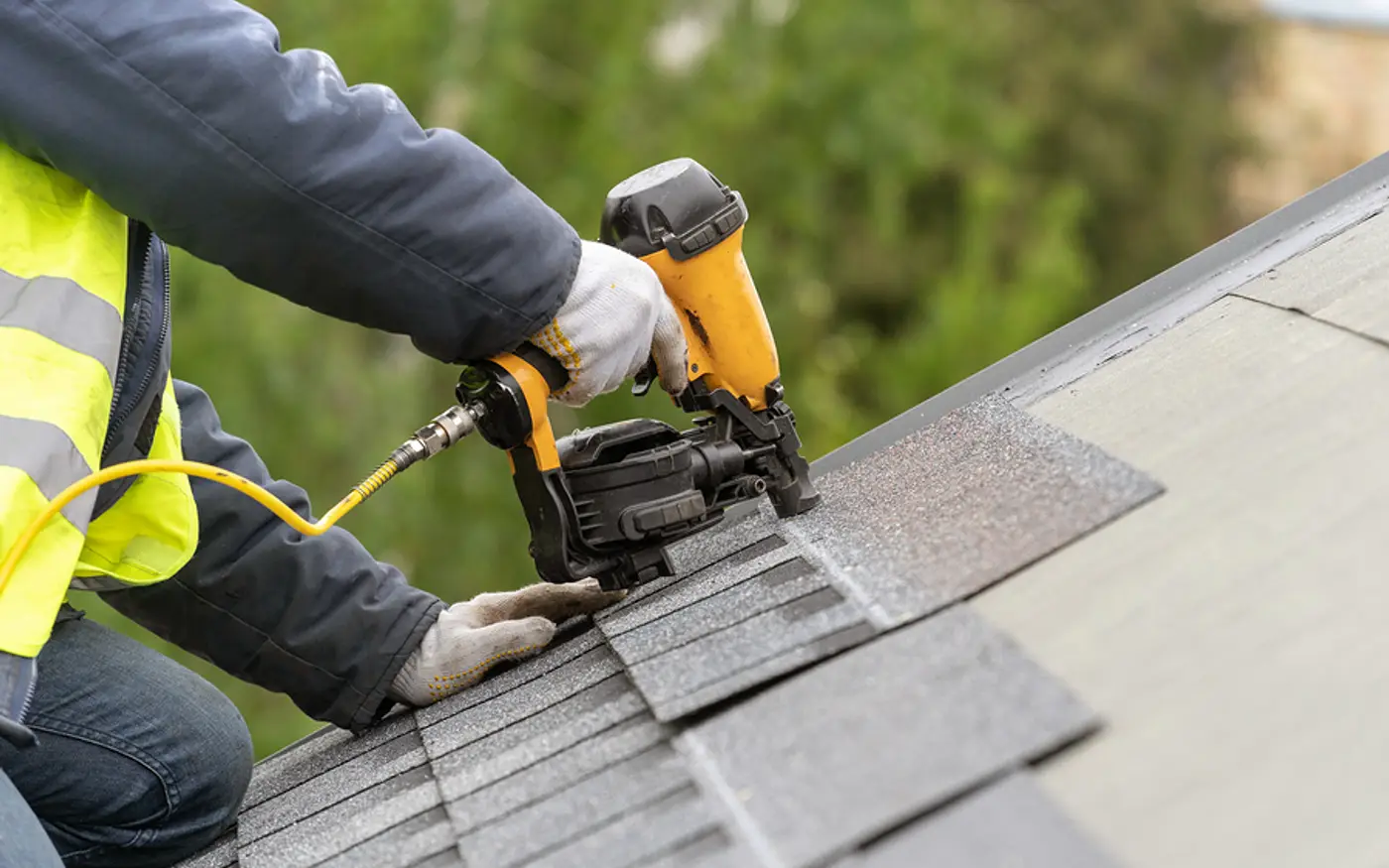
Most roof leaks in St. Charles come from a handful of places: flashing at chimneys and walls, cracked pipe boots, blown-off or hail-damaged shingles, and worn valleys. St. Charles Roofing Designs traces the leak to its real source, photographs it, and repairs it to code, and if the roof is too far gone to patch, we tell you so. Free written quotes at (636) 242-5111.
What roof repair covers
A repair fixes a specific failure on a roof that is otherwise sound. That might be a single leak over a bathroom, a row of shingles the wind peeled off, a chimney flashing that has pulled away from the brick, or a soft spot of decking under a valley. Done right, a repair can add years to a roof that still has life in the shingles.
The hard part is usually finding the leak, not fixing it. Water runs along the underside of the decking and down rafters before it shows up on a ceiling, so the stain in your hallway may be several feet from the hole. We start in the attic where we can, follow the water trail, and then match it to what we see on the roof.
Signs you need a roof repair
- A ceiling or wall stain that grows after rain, or a drip in the attic.
- Missing, lifted or creased shingles after a windstorm. A crease across the shingle means the seal broke and it will keep lifting.
- Shingle pieces or heavy granules in the yard or gutters.
- Cracked rubber around plumbing vents. Pipe boots dry out in our summer sun and often fail before the shingles do.
- Gaps, rust or loose caulk where the roof meets a chimney, wall or skylight.
- Peeling paint or rot on fascia boards and the edge of the roof, often a sign of missing drip edge.
- Ice dams or icicles along the eaves in winter, which can push water back under shingles.
The repairs we do most
Flashing at chimneys, walls and skylights
Flashing is the most common leak source we find. Step flashing should run under each course of shingles where a roof meets a wall, with counterflashing covering it. On brick chimneys, counterflashing belongs in a cut mortar joint, not glued to the face of the brick with sealant. When we repair flashing, we rebuild it the right way instead of adding another layer of caulk.
Pipe boots and roof vents
The rubber collar around a plumbing vent cracks with age and UV, and water runs straight down the pipe. Replacing the boot is a small, inexpensive repair that stops a surprising number of leaks. We also reseat or replace damaged box vents, ridge vent and exhaust caps.
Wind and storm damage
A spotter estimated 70 mph winds in St. Peters during the May 26, 2024 storms, according to the National Weather Service. Winds like that lift shingle tabs and break the seal strips. We replace missing and creased shingles and check that the surrounding ones are still sealed down. If hail is involved, our storm and hail damage roof repair page explains how we document it.
Valleys
Valleys carry more water than any other part of the roof. The county code allows open metal valleys, mineral-surfaced roll, closed valleys over smooth roll, or self-adhered membrane. When a valley is worn or was cut poorly, we rebuild it with ice and water membrane underneath.
Decking and edges
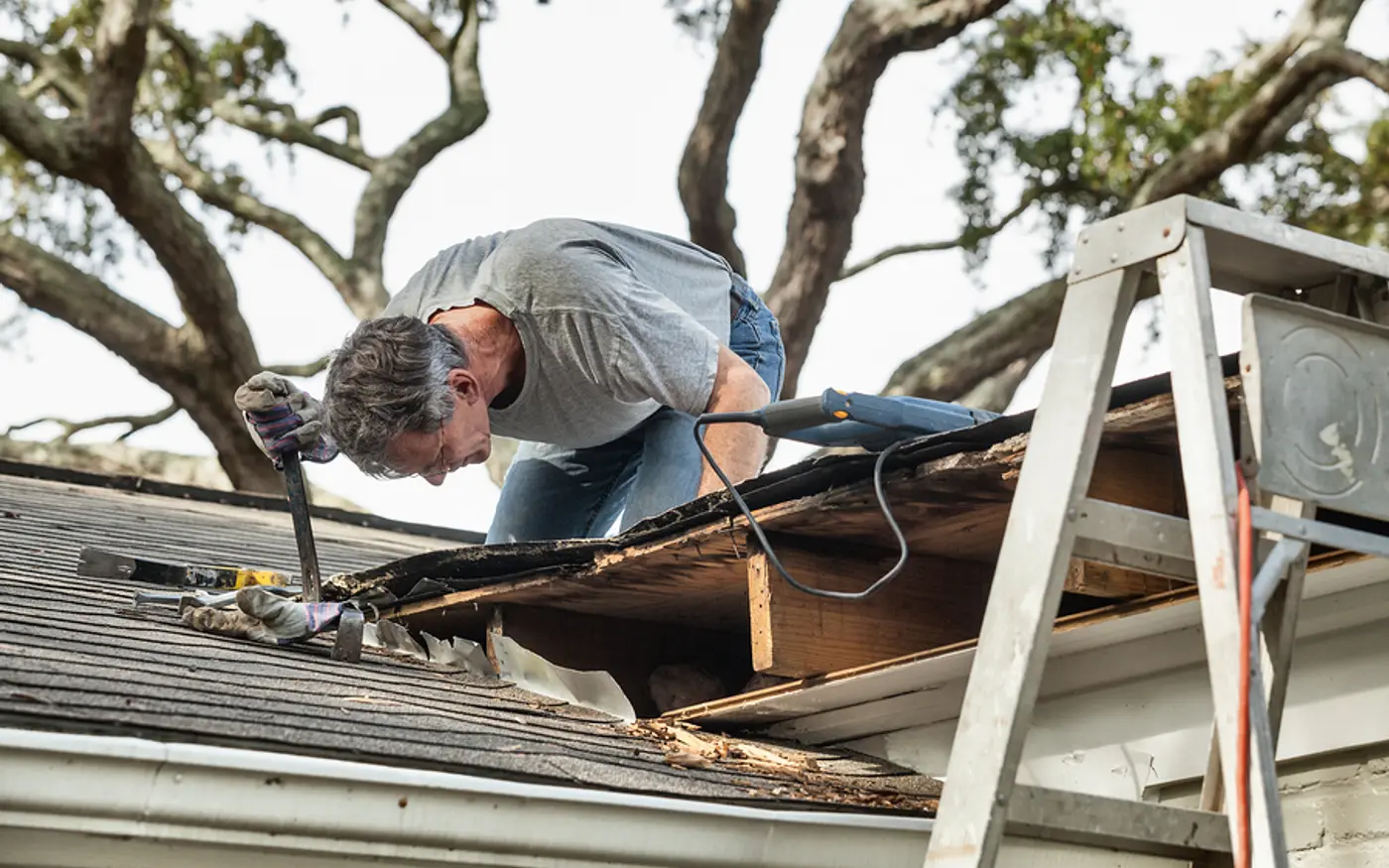
Soft spots usually mean the wood under the shingles has rotted. We cut out the bad section, replace it, and re-shingle the area. Where fascia has rotted because there was never any drip edge, we fix the wood and add drip edge, which the county code now requires at eaves and rakes on new roofing work.
How a repair visit works
- You tell us what you're seeing. Where the stain is, when it leaks, and whether it got worse after a storm.
- We look before we quote. We check the attic and the roof, trace the water path, and photograph the source and anything else that looks wrong.
- We tell you whether a repair will do. If the roof is sound, we quote the repair. If the shingles are worn out everywhere, we explain why repair money may be wasted and what a replacement would involve.
- We repair it to code and the manufacturer's instructions. Matching shingles where available, proper flashing, and membrane where it belongs.
- We clean up and show you the work. You get photos of the finished repair.
A good repair fixes the cause of the leak, not just the spot where the water showed up.
Repair or replace?
We'd rather sell you a repair that works than a roof you don't need yet. But we'll also be straight with you when patching no longer makes sense. These are the questions we weigh:
| Situation | Usually points to |
|---|---|
| One leak at a pipe boot, chimney or skylight | Repair |
| A few blown-off shingles on a roof under about 15 years old | Repair |
| Curling, cracking and granule loss across most slopes | Replacement |
| Leaks in several places, or leaks that keep coming back | Replacement |
| Widespread decking rot or sagging | Replacement |
| Hail bruising on every slope | Replacement, possibly through insurance |
If you're leaning toward a new roof, our roof replacement page explains the full process. If you just want to know where your roof stands, a roof inspection gives you photos and a plain-language assessment.
What affects the cost of a repair
We don't publish repair prices, because a pipe boot on a walkable ranch roof and flashing on a three-story brick chimney are very different jobs. The things that move the number are roof pitch and height, access, how far water has spread into the decking, the material (shingles, metal, slate-style or stone-coated steel), and whether matching materials are available. You get a free written quote after we look.
Roof repairs around St. Charles
Older homes in the city
The historic homes near our office have their own repair patterns. In Frenchtown, Federal-style brick houses have parapet end walls, where coping and counterflashing into the brick are the usual leak points, and gallery and porch roofs that tie into the main roof. Along Historic Main Street, many commercial buildings have low-slope roofs behind parapets. In the historic districts, maintenance that keeps the roof looking the same generally doesn't need Landmarks Board approval, but a repair that changes the roof's appearance can. Our historic home roofing page covers that.
Midtown, Lindenwood and the 1960s ranches
In Midtown and Lindenwood, the National Register nomination records slate, standing-seam metal, pressed-metal shingles and asbestos-cement shingles on older homes. Asbestos-cement shingles need proper handling under abatement rules, so we identify them before anyone starts cutting.
Subdivisions in St. Peters and beyond
In St. Peters and Cottleville, most repair calls are wind-lifted shingles, cracked pipe boots and storm damage on younger roofs. On newer homes, we also look for builder-grade details like missing kickout flashing where a roof edge meets a wall.
Storm damage, insurance and your rights
After a hailstorm, out-of-town crews often knock on doors in St. Charles County. Know the rules before you sign anything. Under RSMo 407.725, a roofer may not offer to pay or rebate any part of your insurance deductible, and you can cancel a contract to be paid from your policy before midnight of the fifth business day after your insurer tells you in writing that the claim isn't covered. Our guide to Missouri hail damage roof claims and your rights explains it in detail. We document what we find with dated photos you can share with your insurer.
Get your roof looked at
If you have a leak, a stain or shingles in the yard, call (636) 242-5111. We're open 8am to 8pm, seven days a week, and we'll set up a time to look at the roof and give you a free written quote. Business owners can see our commercial roofing page for flat and low-slope roof repairs.
Frequently Asked Questions
Is it worth repairing an old roof, or should I replace it?
A repair is worth it when the problem is isolated and the rest of the roof is sound: a cracked pipe boot, a failed chimney flashing, a few blown-off shingles. When shingles are curling and shedding granules across whole slopes, or the roof leaks in several places, repair money usually buys only a short reprieve. We photograph what we find so you can see the difference and decide.
Why does my roof leak only when it rains hard or the wind blows?
Leaks that appear only in heavy or wind-driven rain usually come from flashing, not from the shingles themselves. Water gets pushed sideways under step flashing at a wall, behind a chimney's counterflashing, around a skylight curb, or up under shingles on a low-slope section. Those spots need the flashing rebuilt, and caulk alone rarely holds for long.
Can you match my existing shingles?
Often we can get close, but an exact match is hard. Shingle colors change between production runs, products get discontinued, and the old roof has faded in the sun. On a back slope or small area the difference is usually minor. On a front slope we'll show you the closest available product before we install anything, so there are no surprises.
What should I do if my roof is leaking right now?
Move belongings away from the leak, put a bucket under the drip, and if the ceiling is bulging with water, poke a small hole at the low point to drain it into a bucket so the drywall doesn't collapse. Take photos for your records. Don't climb onto a wet or storm-damaged roof. Then call us at (636) 242-5111 and we'll set up a time to look at it.
Does homeowners insurance cover roof repairs?
Insurance generally covers sudden damage from a covered event such as hail or a windstorm, minus your deductible, and does not cover wear, age or lack of maintenance. Many Missouri policies use a separate wind and hail deductible of 1% or 2% of dwelling coverage, so a small repair may cost less than the deductible. We document what we find with dated photos you can share with your insurer.
Do I need a permit for a roof repair in St. Charles?
Replacing roof shingles is on the City of St. Charles list of projects that generally don't need a building permit, and routine repairs are smaller still. Structural work such as replacing rafters or large areas of decking may need one, and historic district homes may need Landmarks Board approval if the repair changes the roof's appearance. Call the city's Community Development office at 636-949-3222 to confirm.