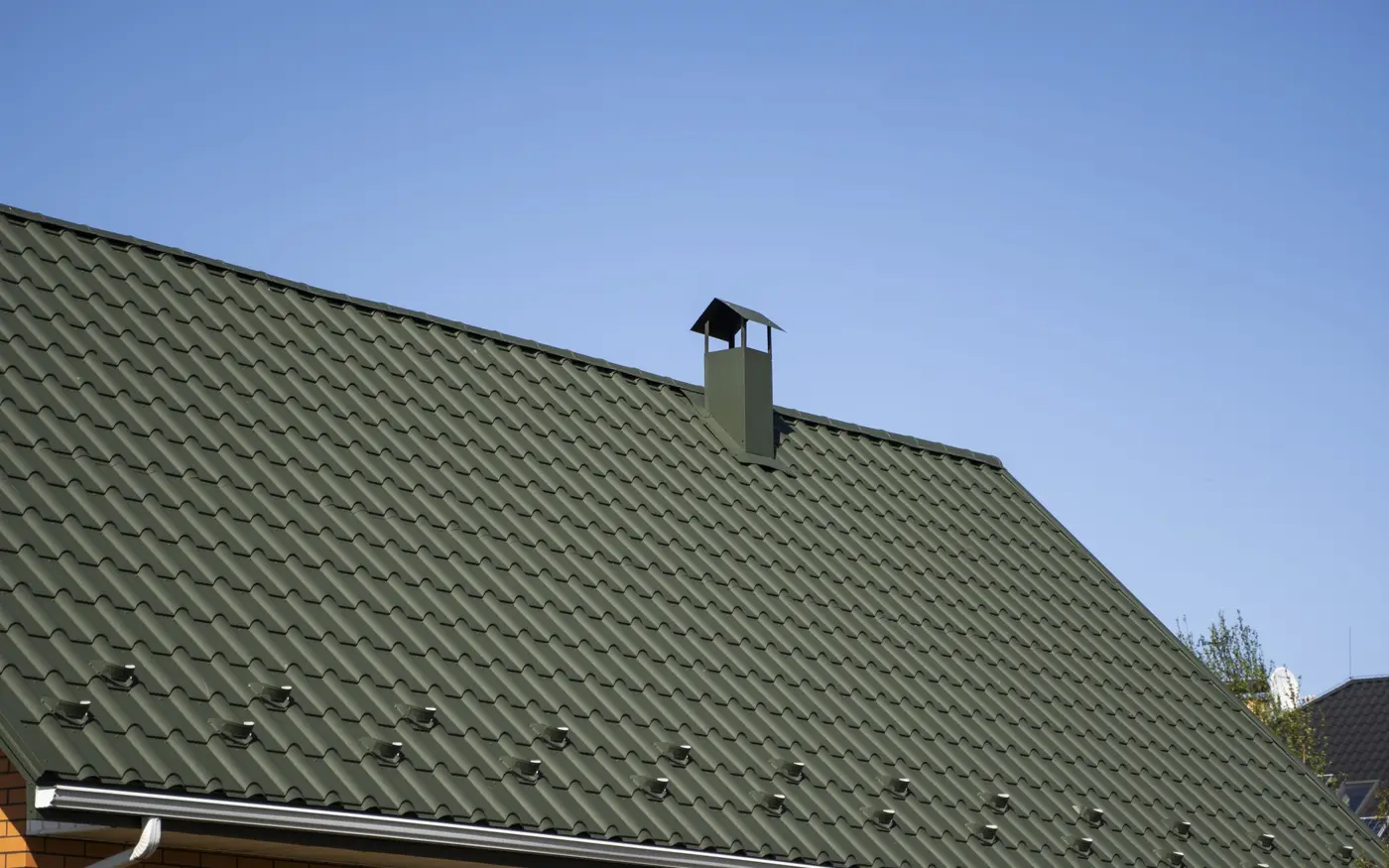
St. Charles Roofing Designs repairs and replaces roofs in Portage des Sioux, the small Mississippi River town at the end of Route J. Roofing here means planning for floodplain permits, the 50% substantial-damage rule after a flood, raised homes with high eaves, and open wind off the river bottoms. Call (636) 242-5111 for a free written quote after we look at the roof.
Portage des Sioux at a glance
Portage des Sioux is one of the oldest towns in the region. It was founded in 1799 under Spanish Lieutenant Governor Zenon Trudeau and François Saucier, and in 1815 it gave its name to the Treaties of Portage des Sioux, signed here after the War of 1812. Today it is a city of 335 people (2020 census) covering about 0.68 square miles in ZIP code 63373, sitting on the Mississippi roughly across from Elsah, Illinois.
Most people reach town by driving north out of St. Charles on Highway 94 and turning onto Route J. Students attend the Orchard Farm R-V School District, the same district that serves Orchard Farm and New Town at St. Charles. The best-known landmark is Our Lady of the Rivers Shrine. After the 1951 flood spared the town, residents dedicated a 25-foot fiberglass statue of Mary on a 20-foot pedestal on October 13, 1957. The shrine still hosts the annual Blessing of the Fleet each July, and St. Francis of Assisi Parish serves the town.
Homes and roofs in a river town
Portage des Sioux is not a subdivision town. Houses were built over many decades on small town lots, along with river and marina properties, outbuildings and the occasional farm structure on the edges of town. That means the roofs we look at here vary from one house to the next: asphalt shingles on older frame homes, metal on sheds, garages and some houses, and low-slope sections over porches and additions.
Flood history has also changed the housing stock. Some owners have raised their homes, and some properties have been bought out and cleared. A raised house changes how a roof job runs. The eaves sit higher, ladders and staging need more planning, and debris has to come down safely from greater height. On a house that was lifted, we also check how the roof meets any porches, stair covers or additions built afterward, because those tie-ins are where leaks tend to start.
Roof problems we look for in Portage des Sioux
- Wind damage on exposed lots. Open river bottoms give wind a long run with nothing to slow it. Lifted or creased shingles along eaves, rakes and ridges are the first thing we check after a storm.
- Missing or short drip edge. St. Charles County's residential code requires drip edge at both eaves and rakes. Older roofs often have it only at the eaves, or none at all, which lets wind-driven rain wick under the edge and rot the decking.
- Moisture-damaged decking. Homes that have taken on water, or sat in humid conditions after a flood, can have soft or stained sheathing. We check from the attic where we can and photograph what we find.
- Tired low-slope sections. Porch and addition roofs built too flat for shingles are a common leak source. Asphalt shingles need at least a 2:12 slope, and low slopes need a different approach.
- Metal roof fasteners. Exposed-fastener metal on homes and outbuildings relies on screws and rubber washers that wear out over time and should be checked and replaced as needed.

Permits and floodplain rules in Portage des Sioux
This is the part that sets Portage des Sioux apart from most of St. Charles County. In much of the county, replacing a roof generally does not require a building permit. Floodplain rules are different. St. Charles County's floodplain program states that floodplain development permits are required even where a building permit would not be, and it names reroofing a structure as an example. The city of Portage des Sioux has its own floodplain ordinance, and who issues building permits in town is something to confirm with the city.
Call Portage des Sioux City Hall and ask whether your project needs a floodplain development permit or any other approval. We build the start date around that answer. Our guide to roof permits in St. Charles County compares the rules town by town.
The 50% substantial-damage rule
After a flood, the bigger question is often not the roof itself but the total repair bill. Under floodplain rules, if repairing a substantially damaged building costs 50% or more of its pre-damage market value, the building must be brought into compliance with current floodplain standards. In St. Charles County that means the lowest floor at least one foot above base flood elevation. A roof replacement alone rarely triggers this, but a roof added to drywall, flooring, mechanical and structural repairs can push the total over the line. Ask the city how they count costs before you commit to a combined repair plan.
In a floodplain town, the permit question comes before the shingle question.
Floods, buyouts and storms
The Mississippi defines life here. During the record 1993 flood, the river crested at 38.17 feet at the Grafton gauge on August 1, 1993, and water reached every street in Portage des Sioux. In June 2019 the river rose to about 34.7 feet, streets became impassable and the church basement flooded. St. Charles County's buyout notices list the 1973, 1993, 2011 and 2019 floods.
After 2019, the county launched a voluntary buyout program funded with about $15.7 million in federal HUD disaster recovery money (CDBG-DR). More than 900 homes flooded in that event, and the program is set up to buy up to about 100 of them, with the land kept as permanent open space. It covers unincorporated areas, Portage des Sioux, West Alton and parts of the City of St. Charles, and it is expected to wrap up by early 2027. If you are weighing a buyout, a major roof investment may not make sense yet. If you plan to stay, a roof built for wind and water is worth getting right.
Wind and hail matter too. The National Weather Service documented hail of 3 to 3.75 inches over St. Charles County on March 14, 2024, and 2.75-inch hail near St. Charles on May 26, 2024. On November 4–5, 2024, the NWS confirmed an EF-0 tornado on a 6-mile track in northwestern St. Charles County that partly destroyed a pole barn and caused minor roof damage to homes. Our St. Charles County hail history lists the documented events.
Roofing services Portage des Sioux homeowners ask for
Repairs after wind and storms
Most calls from river towns start with a storm: shingles off the ridge, a lifted edge, a leak at a vent. Our roof repair work fixes those problems with matching materials, and if hail or wind damage is widespread, our storm and hail damage roof repair service documents what we find with dated photos you can share with your insurer.
Full replacement
When a roof is worn out, or has been through one storm too many, a roof replacement is the better money. We tear off to the decking, replace soft sheathing, install drip edge at eaves and rakes as the county code requires, and add ice and water shield in valleys and around penetrations. That last step isn't required by code in St. Charles County, but it is cheap insurance against wind-driven rain.
Metal roofing
For exposed lots and raised homes, metal roofing is a strong option. It is light, sheds water quickly and holds up to wind when fastened correctly. Standing seam hides its fasteners; exposed-fastener panels cost less but need periodic screw and washer checks.
Wind-rated shingles
If you prefer shingles, architectural shingles carry wind ratings well beyond the basic 3-tab product. We look at the ASTM D7158 or D3161 wind class on the wrapper and match it to your exposure.
Nearby areas we serve
Portage des Sioux sits at the north end of a string of river-bottom communities. Just south and east, we work across the farms and acreage homes of Orchard Farm and north St. Charles County. At the confluence, West Alton faces the same floodplain permits and raised-home access questions. Closer to our office, New Town at St. Charles shares the Orchard Farm R-V school district. Wherever you are in north county, call (636) 242-5111 and we will come look at the roof.
Frequently Asked Questions
Do I need a permit to replace my roof in Portage des Sioux?
Check with Portage des Sioux City Hall before work starts. The city has its own floodplain ordinance, and in St. Charles County floodplain rules can require a floodplain development permit even for reroofing, a job that usually needs no building permit elsewhere. Who issues building permits in town is something to confirm directly with the city, and we plan the schedule around whatever approval they require.
Does a new roof count toward the 50% substantial damage rule?
It can. Under floodplain rules, if the cost to repair a substantially damaged building reaches 50% of its pre-damage market value, the building must be brought into compliance, including raising the lowest floor above base flood elevation. A roof on its own rarely gets there, but a roof bundled with post-flood repairs might. Ask the city how they count costs before you sign.
Is metal roofing a good choice for a home near the river?
Often, yes. Metal sheds wind-driven rain well, handles the open exposure of river-bottom lots, and is light, which matters on homes that have been raised on piers or foundations. It costs more up front than shingles. Architectural shingles with a high wind rating and full drip edge are also a sound choice. We price both so you can compare.
Can you work on a raised or elevated house?
Yes. A raised home puts the eaves higher off the ground, so we plan ladder placement, staging and debris handling before the job starts, and we look at how the roof ties into any added porches or stairs. Access is part of the free written quote, so the extra height is accounted for up front rather than discovered on tear-off day.
How far is Portage des Sioux from your office?
Our office is at 498 S 5th St. in St. Charles. Portage des Sioux is north of the city: take Highway 94 north and then Route J into town. We work throughout north St. Charles County, including Orchard Farm and West Alton, and we answer the phone 8am to 8pm, seven days a week, at (636) 242-5111.