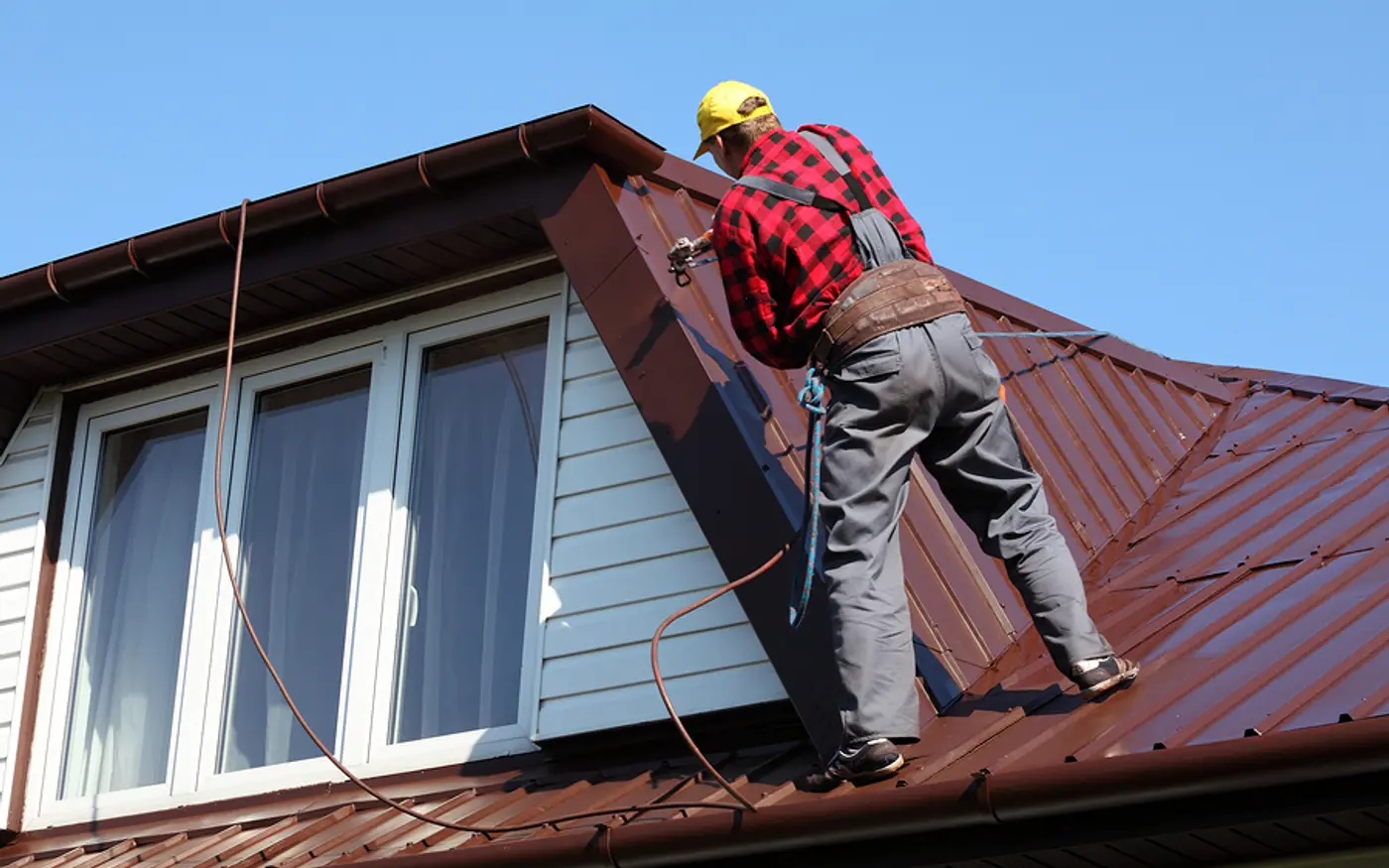
St. Charles Roofing Designs repairs and replaces roofs in Midtown and Lindenwood, the two National Register neighborhoods west of downtown St. Charles. Midtown has slate, standing-seam, pressed-metal and asbestos-cement roofs on homes dating from the 1830s on. Lindenwood adds steep Victorian, Tudor and Dutch Colonial roofs near Lindenwood University. Our South Fifth Street office is a few blocks away. Call (636) 242-5111 for a free written quote.
Where Midtown and Lindenwood are
These neighborhoods fill the residential blocks between downtown and Lindenwood University. They're often lumped together, but they're two separate National Register districts with different ages and different roofs.
Midtown covers roughly the blocks around Clark, Madison, Jefferson and Kingshighway, along with Second and Third streets. Listed on the National Register in 2014, the district spans about 125 acres and 527 contributing buildings built between about 1838 and 1959. Landmarks include the St. Charles County Courthouse, Benton School (1896), St. John's A.M.E. Church (1872) and Immanuel Lutheran Church (1867). Our office at 498 S 5th St. is a few blocks from the district.
Lindenwood is smaller: about 22 acres across portions of seven blocks, bounded by Gamble Street on the west, Elm Street on the north, Watson Street on the south and the alley between Kingshighway and Houston on the east. It sits immediately east of Lindenwood University, was platted around 1900 to 1905, and was listed on the National Register in 2016 with 108 contributing buildings. Both neighborhoods are generally in the St. Charles R-VI school district.
Midtown's roofs: the most varied in the city
Midtown is mostly single-family homes with many duplexes, one to two and a half stories, in brick or frame. What sets it apart for a roofer is the range of materials documented in the neighborhood's National Register nomination:
| Material recorded in Midtown | What it means for repair or replacement |
|---|---|
| Slate, including patterned slate and conical tower roofs | Often repairable piece by piece. Towers need hand-cut, tapered work and careful flashing at the base. |
| Standing-seam metal | Seams and flashing can be repaired. Modern replacements use concealed clips that allow thermal movement. |
| Pressed-metal shingles | Stamped metal shingles that rust at the edges and fasteners. Matching them takes looking, not a catalog page. |
| Asbestos-cement shingles | Brittle and possibly asbestos-containing. Test before disturbing; removal follows abatement rules. |
| Corrugated metal on outbuildings | Garages and sheds with exposed-fastener panels whose screws and washers need periodic checks. |
| Terra cotta tile ridge | Decorative ridge pieces worth saving and resetting when the roof below is replaced. |
| Asphalt shingles | The most common covering today, often installed over or in place of an earlier material. |
In Midtown, the first question isn't what to put on the roof. It's what's already up there.
Lindenwood's roofs: steep, ornamented, mostly asphalt
Lindenwood's houses went up in the early 1900s in a parade of styles: Queen Anne, Folk Victorian, Colonial Revival, Dutch Colonial Revival with gambrel roofs, Tudor, Mediterranean, and Craftsman bungalows. The district's roofs are mostly asphalt now, but the shapes beneath them are demanding.
- Steep pitches. Queen Anne and Tudor roofs are often steeply pitched, which means more staging and safety setup, and slower work per square.
- Gambrels. Dutch Colonial gambrels have a sharp break between a steep lower slope and a shallower upper one. That transition needs its own flashing so water doesn't get behind the shingles at the bend.
- Wide overhangs and exposed rafter tails. On bungalows and Craftsman houses, the eave is part of the design. Drip edge and the first course have to be installed so they look right from below, and rotted rafter tails are a common discovery.
- Decorative gables. Some homes have octagonal shingles in the gables. That siding work isn't roofing, but it sits right next to the rake edge and has to be protected during a reroof.
Around the university there are also many 1960s homes; the census tract's median year built is 1961. Those ranches and split-levels are now on their second or third roof and need the same things as 1960s homes anywhere in the county: a tear-off of multiple layers, decking repair, and ventilation brought up to date.
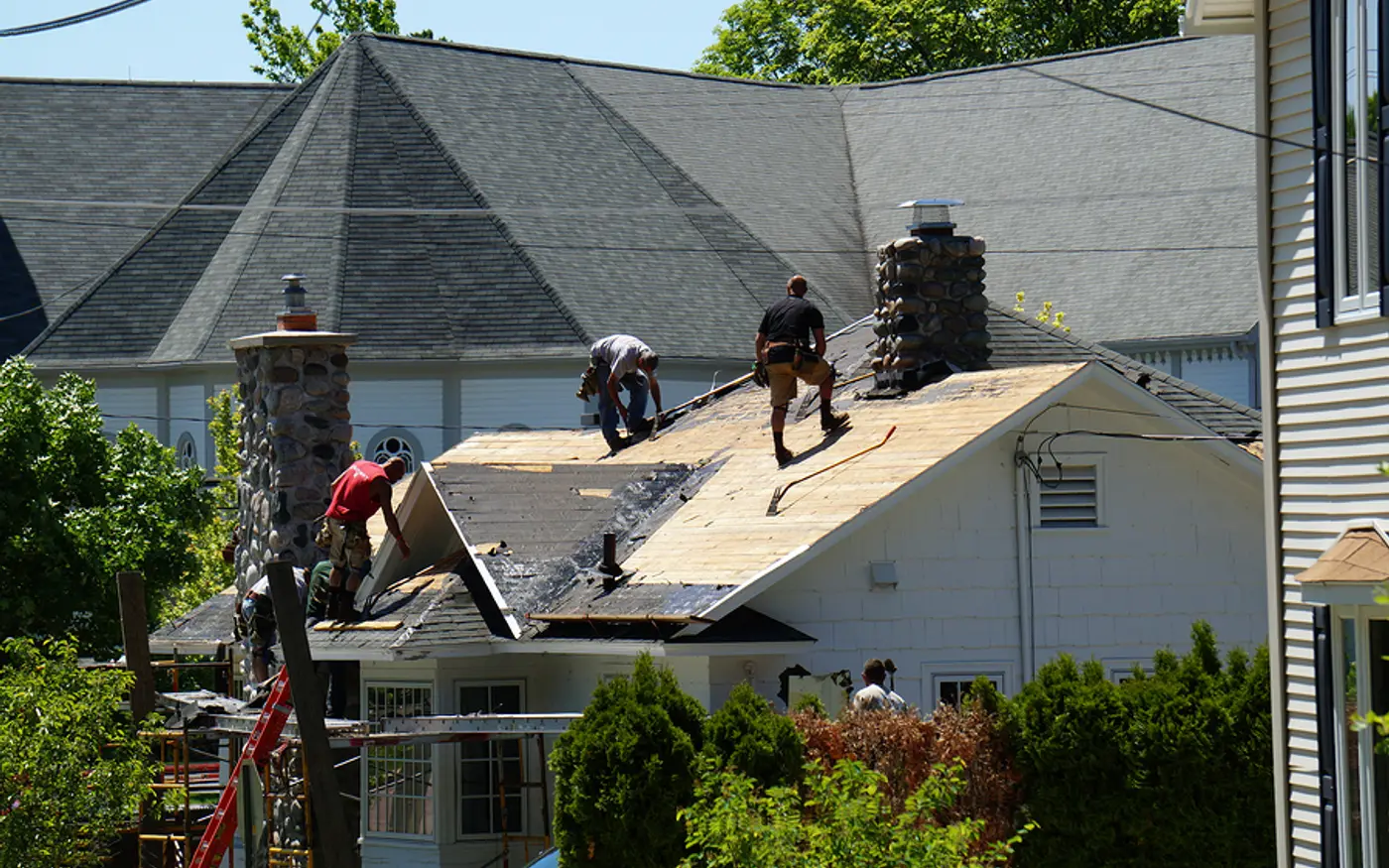
Permits and review in Midtown and Lindenwood
This is where these neighborhoods differ most from Frenchtown and Main Street. Midtown and Lindenwood are National Register districts, but they are not among the city's six local preservation districts. National Register listing alone generally does not add city design review for a private homeowner's reroof, so replacing a roof here usually doesn't require a Certificate of Appropriateness from the Landmarks Board. Historic district boundaries in central St. Charles can be confusing, so confirm with the city's preservation office (636-949-3228) that your address isn't inside a local district before you change materials.
On the building side, the city's Building Division lists replacing roof shingles as work that generally doesn't need a permit. Structural work like replacing rafters, adding a dormer or skylight, or changing the pitch is likely to need one; the exact threshold isn't published, so call Community Development at 636-949-3222 if your project goes beyond the roof covering.
Code still applies whether or not a permit is pulled. The city enforces the 2021 International Residential Code: a roof with two or more layers can't be covered again, asphalt shingles need at least a 2:12 slope, and roofs from 2:12 up to 4:12 need double underlayment. The city's design values call for 107 mph ultimate wind and a "Severe" weathering rating. Ice barrier isn't required by the code, but we still recommend ice and water shield in valleys, at chimneys and around penetrations.
If you'd like your Midtown house to look the way it did originally, even without a requirement to, our guide to replacing a roof in a St. Charles historic district covers material choices that suit older homes. For a sense of budget, our article on what a new roof costs in St. Charles walks through the cost factors.
Asbestos-cement shingles: handle with care
Because the Midtown nomination records asbestos-cement shingles, this is worth its own note. These are the stiff gray or colored shingles that look like thin cement panels. They're not dangerous sitting intact on a roof, but breaking, cutting or power-washing them can release fibers. Asbestos-containing materials are regulated, so the right sequence is to have the material tested, and if it's positive, have it removed under the applicable abatement rules before roofing work begins. Don't let anyone tear it off like ordinary shingles.
Weather on old roofs
Hail is the main storm threat here. The National Weather Service reported supercells over St. Charles County producing hail of 3 to 3.75 inches on March 14, 2024, and hail up to 2.75 inches near St. Charles on May 26, 2024. Slate cracks, pressed-metal shingles dent, and aging asphalt loses granules. Freeze-thaw winters also work on old mortar at chimneys. After a storm we photograph what we find, with dates, so you can share the record with your insurer. Our storm and hail damage repair page explains what we look for.
The work we do most in these neighborhoods
Slate and metal repairs. Much Midtown work is roof repair on materials worth keeping: replacing broken slates, reflashing chimneys, resealing standing-seam porch roofs, and patching pressed-metal shingles.
Standing-seam metal. On homes and porches where metal fits the history, a new metal roof is a natural choice, and in Midtown it generally doesn't trigger Landmarks Board review.
Period-appropriate replacements. For steep Lindenwood roofs and older Midtown homes, our historic home roofing service covers shingle profiles and colors that suit the house, gambrel and tower details, and saving ridge tile.
Full replacements. For the 1960s homes near the university and worn-out asphalt roofs throughout, roof replacement with architectural shingles is the most common request.
Nearby areas
Head east down the hill and you're on Historic Main Street, where the work shifts to flat roofs behind parapets. To the northeast, Frenchtown has brick homes with parapet end walls inside a local preservation district. Wherever you are in central St. Charles, call (636) 242-5111, 8am to 8pm, seven days a week.
Frequently Asked Questions
Are Midtown and Lindenwood local historic districts?
They are National Register historic districts: Midtown was listed in 2014 and Lindenwood in 2016. They are not among the city's six local preservation districts. National Register listing alone generally does not add city design review for a private homeowner's reroof, so a like-for-like replacement usually doesn't need a Certificate of Appropriateness. Boundaries can be confusing, so confirm with the city's preservation office at 636-949-3228 that your address isn't in a local district.
My Midtown house has old gray shingles that look like cement. What are they?
They may be asbestos-cement shingles, which the Midtown National Register nomination records on homes in the neighborhood. They're durable but brittle, and because they can contain asbestos, they shouldn't be broken up, sanded or power-washed. Removal is regulated, so the usual first step is having the material tested. If it does contain asbestos, removal needs to follow the applicable abatement rules before a new roof goes on.
Can a slate roof in Midtown be repaired instead of replaced?
Often, yes. Slate itself can last a very long time, and many slate roofs fail at the flashing, the fasteners or a few broken pieces rather than across the whole roof. Replacing broken slates, reflashing chimneys and valleys, and repairing the ridge can extend its life. When a large share of slates are delaminating or flaking, replacement becomes the more practical choice. We'll tell you which situation you're in.
Why are Lindenwood roofs harder to replace than newer homes?
Many homes in the Lindenwood Neighborhood Historic District were built in the early 1900s with steep pitches, gambrel or Tudor forms, wide overhangs and exposed rafter tails. Steep roofs take more safety setup and time per square, gambrels have a pitch change that needs careful flashing, and exposed rafter tails mean the eave detail is visible and has to look right. Those factors show up in labor, not just materials.
Do I need a permit to replace my roof in Midtown or Lindenwood?
The City of St. Charles lists replacing roof shingles among projects that generally don't require a building permit. Structural work is different: replacing rafters, adding a dormer or skylight, or changing the roof pitch is likely to need a permit. The exact line isn't spelled out on the city's site, so call Community Development at 636-949-3222 if your job goes beyond replacing the roof covering.
Is a standing-seam metal roof appropriate on an older Midtown house?
Standing-seam metal has a long history in Midtown. The neighborhood's National Register nomination records it alongside slate and pressed-metal shingles, so it's a period-appropriate material on many homes and porches. Because Midtown isn't one of the city's local districts, choosing metal generally doesn't trigger Landmarks Board review, but confirm your address first. Modern standing seam uses concealed clips that let the panels expand and contract.