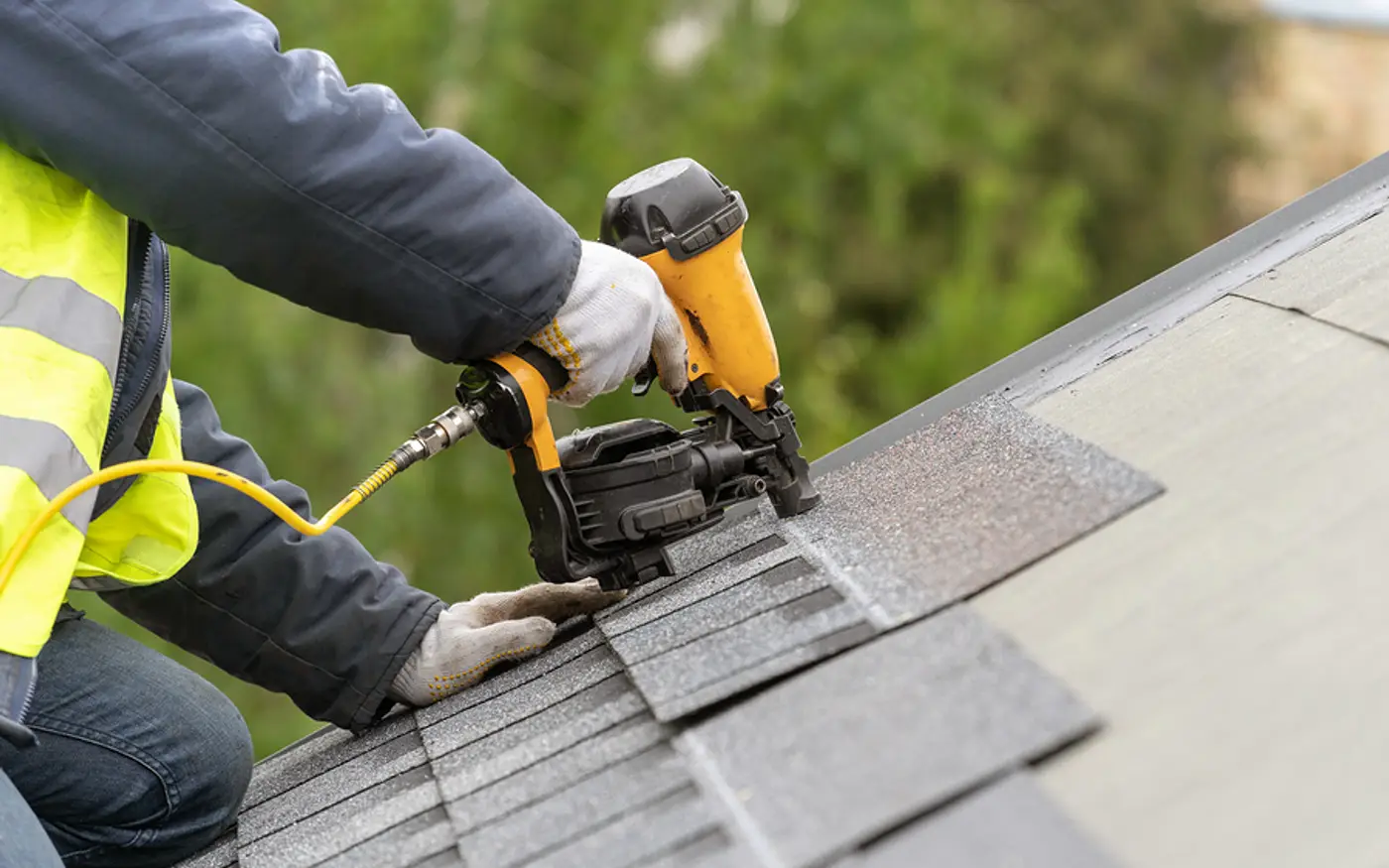
Architectural shingles are thick, multi-layer asphalt shingles that give a roof depth and shadow lines, and they are the most common re-roof choice in St. Charles today. St. Charles Roofing Designs installs them over new underlayment with drip edge at eaves and rakes, as St. Charles County code requires, and gives free written quotes. Call (636) 242-5111, 8am to 8pm, seven days a week.
What architectural shingles are
An architectural shingle (also called a dimensional or laminated shingle) is a fiberglass-mat asphalt shingle made from two or more layers laminated together. The bottom layer shows through cutouts in the top, which creates the staggered, shake-like look you see on most newer homes in St. Charles County. A flat 3-tab shingle, by contrast, is a single layer with a uniform pattern.
That extra material does real work. Architectural shingles are heavier, lie flatter in wind, hide small irregularities in old decking, and typically carry higher wind ratings and longer manufacturer warranties than 3-tab. InterNACHI estimates their life at about 30 years, against about 20 for 3-tab. That gap is why, when a 1980s or '90s subdivision home in Harvester or St. Peters gets its second roof, the original 3-tab almost always comes off and architectural goes on.
When it's time for a new shingle roof
Most people call us after a leak or a hailstorm. But the roof usually tells you it's wearing out well before water shows up on a ceiling. Watch for:
- Granules in the gutters or at the downspout splash blocks. Some loss is normal on a new roof; heavy loss on an older one means the asphalt underneath is exposed to sun.
- Curling, cupping or cracked shingles, especially on south- and west-facing slopes that take the most summer heat.
- Shingles lifting or missing after wind. Once the seal strips let go, they rarely reseal well.
- Dark streaks on north slopes. This is usually algae (Gloeocapsa magma), which is mostly cosmetic, but it's a good reason to choose algae-resistant shingles on the next roof.
- Soft spots underfoot or sagging lines, which point to damaged decking.
- Age. A roof over 20 years old that has been through several hail seasons is worth having looked at, even if it isn't leaking.
Not every one of these means a full replacement. If the problems are isolated, a roof repair may buy you years, and we'll tell you so. If you're not sure where your roof stands, start with a roof inspection and written assessment.
How we install an architectural shingle roof
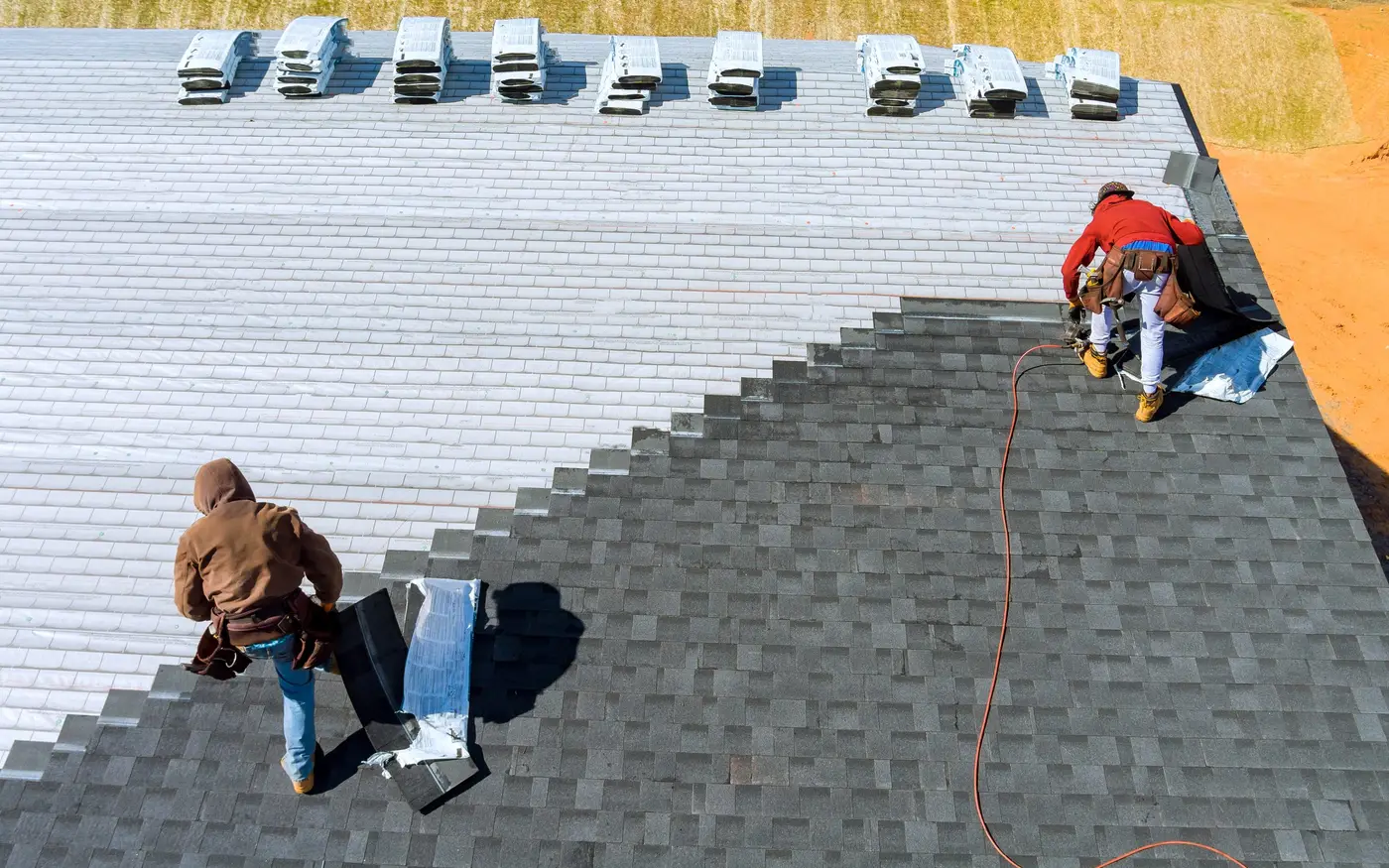
Shingles are only as good as what's under them and how they're nailed. On every roof replacement, we follow the same order of work.
- Look before we quote. We walk the roof, check the attic where we can, count the existing layers and photograph what we find.
- Tear off to the deck. We remove the old shingles and underlayment so we can see the decking. Code forbids a new layer over two or more existing layers, and a tear-off is almost always the better choice even when one layer is all that's there.
- Repair the decking. Rotted, delaminated or broken boards are replaced so the new shingles have a solid nailing surface.
- Drip edge and underlayment. Metal drip edge goes on at eaves and rakes. Underlayment laps over the drip edge at the eaves and under it at the rakes, the way the county amendment specifies.
- Ice and water protection where it counts. Self-adhered membrane goes in valleys, around chimneys, skylights and pipes, and on low-slope sections.
- Valleys and flashing. We build valleys using one of the code-listed methods and install new step and counterflashing at walls and chimneys.
- Shingles, nailed to the manufacturer's pattern. Starter strips, field shingles, hip and ridge caps, all fastened where and how the manufacturer's instructions say.
- Ventilation, cleanup and walk-through. We balance intake and exhaust ventilation, clear nails and debris, and go over the finished roof with you.
Details that matter in St. Charles County
Code requirements
The City of St. Charles enforces the 2021 International Residential Code, and unincorporated areas use the 2021 St. Charles County Residential Code. Both set a 107 mph design wind speed and a "Severe" weathering rating. St. Peters' code uses 115 mph. Asphalt shingles need at least a 2:12 slope, with double underlayment between 2:12 and 4:12, which matters on the low porch and addition roofs common on older homes.
The county amendment makes drip edge mandatory at both eaves and rakes, lapped at least 2 inches and fastened no more than 12 inches apart. Ice barrier underlayment is not required by code here. We still install it in valleys and at penetrations because that's where leaks start.
Wind ratings
Shingle wind labels come from two tests. ASTM D7158 rates Class D at 90 mph, Class G at 120 mph and Class H at 150 mph. ASTM D3161 Class F is the other label you'll see. We match the rating and the nailing pattern to the design wind for your address. Many manufacturers require extra nails per shingle for their highest wind coverage.
Hail and impact ratings
Missouri ranked second in the country for State Farm hail claims in 2025. Some architectural shingle lines are tested to UL 2218 and rated Class 3 or Class 4 for impact. They hold up better against moderate hail, and some insurers offer premium discounts for them. They aren't hail-proof, though. Our guide to Class 4 vs. Class 3 shingles in Missouri explains what the test measures and what it doesn't. If hail resistance is your top concern, it's also worth comparing stone-coated steel.
Heat, freeze-thaw and algae
St. Charles sees 35 to 40 days a year at 90°F or hotter and January lows in the low 20s. Poor attic ventilation bakes shingles from below in summer and causes condensation in winter, and either shortens the roof's life. We check intake and exhaust on every job. On shaded or north-facing slopes, shingles with copper-containing granules resist the black algae streaks common here.
The shingle brand matters less than the underlayment, flashing, nailing and ventilation that go in with it.
What affects the cost
We don't publish our own prices because no two roofs are alike, but these are the factors that move the number:
| Factor | Why it matters |
|---|---|
| Roof size and pitch | More squares means more material. Steeper roofs need more safety setup and go slower. |
| Complexity | Dormers, valleys, chimneys, skylights and wall tie-ins all add flashing work. |
| Layers to remove | Two layers take longer to tear off and cost more to dispose of than one. |
| Decking condition | Replacement boards are priced per sheet once the old roof is off. |
| Shingle line | Impact-rated, algae-resistant and designer lines cost more than standard architectural. |
| Ventilation upgrades | Adding ridge vent or intake vents where the attic is under-ventilated. |
For a rough idea, national cost guides put an average asphalt roof replacement around $9,500, with a range from about $5,800 to $46,000, and one third-party estimate for St. Charles puts asphalt at about $4 to $7 per square foot. These aren't our prices. Our St. Charles roof cost guide breaks the numbers down further, and we give a free written quote once we've seen your roof.
Architectural shingles across St. Charles and the county
The right shingle and the paperwork change from one neighborhood to the next.
In Frenchtown and along Historic Main Street, the city's design guidelines list asphalt and fiberglass shingles among acceptable replacement materials. Historic colors run to gray, black and brown. A change in the roof's appearance can require a Certificate of Appropriateness from the Landmarks Board, so we plan color and profile with that in mind. Our historic district roofing guide covers the process.
In New Town at St. Charles, the first roofs from 2004 to 2008 are nearing the end of their life. The New Town architectural review form lists roofing, and work can't begin until written approval comes back. We'll provide the product specs and color samples the form asks for. Rowhouse and party-wall roofs also need careful tie-ins with the neighbor's roof.
In St. Peters and Harvester, many homes built in the 1970s through '90s are on their second or third roof, often replacing original 3-tab. St. Peters' re-roofing requirements say a permit is needed when more than 25% of the sheathing is replaced or the roof covering changes to a different material. Confirm with the St. Peters Building Department before work starts. In Cottleville and Weldon Spring, larger and steeper roofs, many with brick front walls, make wall flashing and ridge ventilation the details to get right. For town-by-town rules, see our St. Charles County roof permit guide.
Comparing your options
Architectural shingles hit the best balance of cost, looks and life for most homes here. If you're weighing alternatives, metal roofing lasts longer and sheds hail differently, and our post on metal roofs vs. architectural shingles lays out the trade-offs. If a recent storm has damaged your current roof, start with our storm and hail damage page, where we explain how we document damage with dated photos you can share with your insurer.
Ready to see what your roof needs? Call (636) 242-5111 or use the quote form. We'll look at the roof and give you a free written quote with the shingle options that fit your house.
Frequently Asked Questions
How long do architectural shingles last in St. Charles?
InterNACHI estimates about 30 years for architectural shingles, compared with about 20 for 3-tab. In St. Charles County, hot summers, freeze-thaw winters and repeated spring hail can shorten that. Attic ventilation, proper fastening and how often the roof takes a hit from hail matter as much as the shingle itself. A roof that has been through a major hail year should be looked at, even if it is not leaking.
What is the difference between architectural and 3-tab shingles?
Both are fiberglass-mat asphalt shingles. A 3-tab shingle is a single flat layer cut into three tabs, which gives a uniform, brick-like pattern. An architectural shingle bonds two or more layers together, so it is thicker and heavier, casts shadow lines that look more like wood shake, and usually carries higher wind ratings and a longer expected life. Most re-roofs in St. Charles County now use architectural shingles.
Do I need a permit to put on new architectural shingles?
In the City of St. Charles, replacing roof shingles is on the city's list of projects that generally do not need a building permit, but historic-district homes may need Landmarks Board approval if the appearance changes. St. Peters publishes its own re-roofing requirements, and unincorporated county parcels follow county rules. Floodplain properties may need a floodplain development permit even for a re-roof. Confirm with your city or the county before work starts.
Can new architectural shingles go over my old roof?
Sometimes, but we rarely recommend it. The residential code bans a new layer over two or more existing layers, and over a roof that is water-soaked or deteriorated. Even where one layer exists, a tear-off lets us inspect and replace bad decking, install drip edge and underlayment correctly, and gives the new shingles a flat surface. Most manufacturers' installation instructions are written around a single layer on sound decking.
Are architectural shingles impact resistant?
Standard architectural shingles are not rated for impact. Some product lines are tested to UL 2218 and rated Class 3 or Class 4, meaning they resisted a steel ball dropped from a set height without cracking. That helps against moderate hail, but it does not make a roof hail-proof, and independent IBHS testing in 2025 rated none of the impact-resistant shingles it tested as Excellent. Some insurers offer discounts for rated roofs.
What wind rating should architectural shingles have here?
St. Charles County and the City of St. Charles use a 107 mph design wind speed, and St. Peters uses 115 mph. Shingle wind labels come from ASTM D7158 (Class D for 90 mph, Class G for 120 mph, Class H for 150 mph) or ASTM D3161 Class F. We match the shingle's rating and the manufacturer's nailing pattern to the design wind for your address.
How much does an architectural shingle roof cost?
National cost guides put an average asphalt roof replacement around $9,500, with a range from roughly $5,800 to $46,000. One third-party estimate for St. Charles puts asphalt at about $4 to $7 per square foot installed. Your actual cost depends on roof size, pitch, layers to remove, decking repairs and the shingle line. We give a free written quote after looking at the roof.