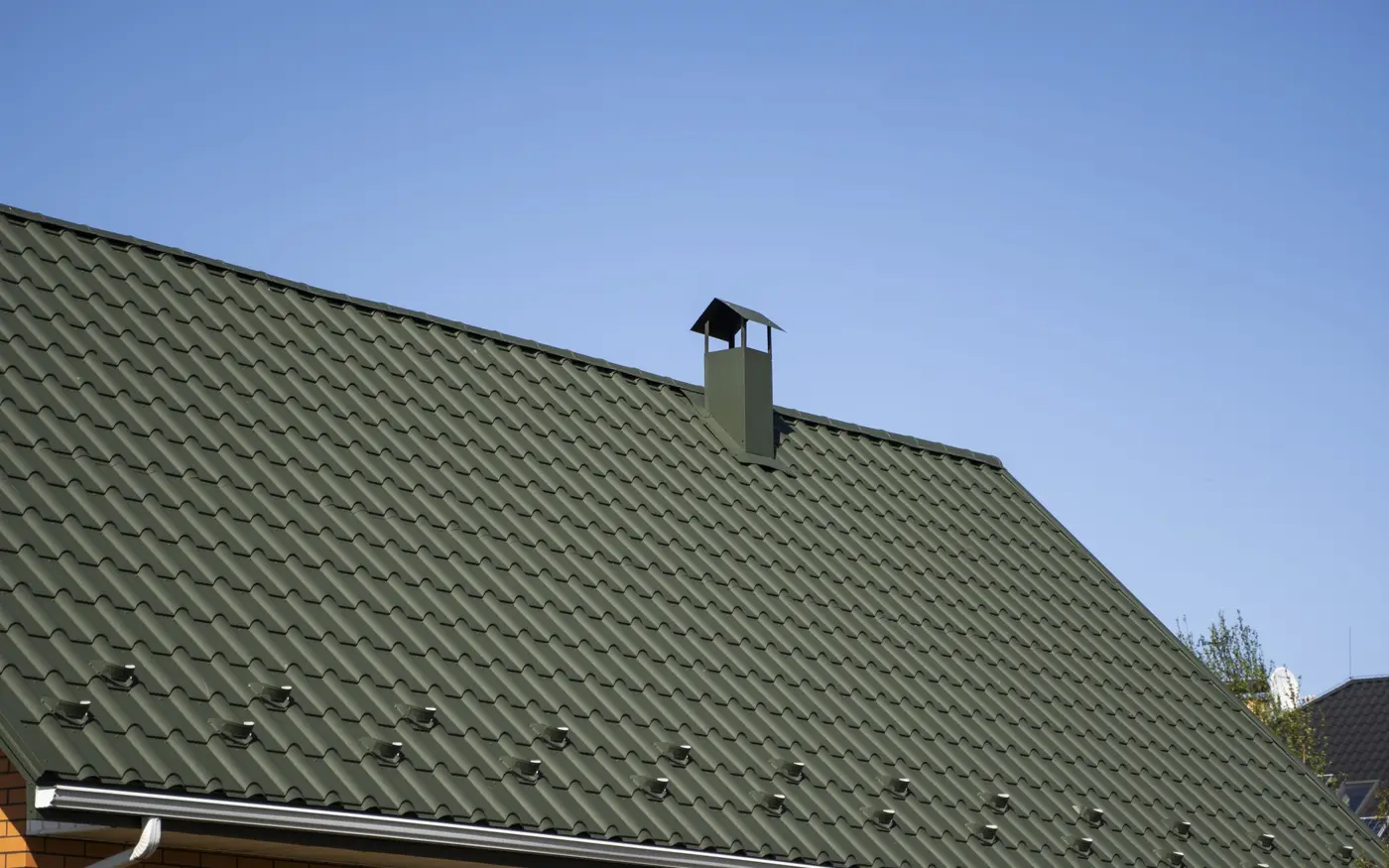
St. Charles Roofing Designs installs standing seam and exposed-fastener metal roofs on homes, porches, outbuildings and commercial buildings across St. Charles, Missouri and nearby St. Charles County. Metal can last decades longer than asphalt shingles, but it costs more, it can dent in big hail, and it isn't allowed everywhere in the historic districts. We look at your roof first and give a free written quote.
What metal roofing is and when it makes sense
A metal roof is a covering of steel or aluminum panels, usually coated with a factory paint finish, fastened over solid decking and underlayment. On houses in St. Charles County the two systems we install are standing seam panels and exposed-fastener panels. A third steel option, stone-coated steel shingles, has a granule finish that looks like shake, tile or shingle; we cover it on its own page because it behaves differently.
Metal makes the most sense when you plan to stay in the house a long time, when the roof is simple enough that panels run cleanly from eave to ridge, or when you have a low-slope porch or addition that asphalt shingles can't properly cover. InterNACHI estimates metal roofs last roughly 40 to 80 years, against about 30 for architectural shingles. If you expect to sell in five or ten years, that extra life is harder to recover, and shingles are usually the more sensible spend.
A metal roof is a long-term decision: it pays off over decades, not over the next few years.
Standing seam
Standing seam panels run vertically with raised seams that lock or snap together. The panels are held down by clips or fasteners hidden under the seam, so no screws go through the face of the roof. That concealed system lets the metal expand on a 95-degree July afternoon and contract on a January night without working the fasteners loose. It is the system most homeowners picture when they say "metal roof," and it is the type the Commons Preservation District's design guidelines name as an acceptable roofing material.
Exposed-fastener panels
Exposed-fastener panels, often called ag panel or R-panel, are screwed directly through the panel face with rubber-washered screws. They cost less to buy and install, which is why they are common on pole barns, garages and outbuildings in the rural north end of the county. The trade-off is maintenance: those washers age in the sun, and screws need periodic inspection and replacement to stay watertight. On a house, we usually steer people toward standing seam unless the budget or the building says otherwise.
Signs metal might be the right next roof
- You're on your second or third asphalt roof and want the next one to last far longer.
- A porch, sunroom or rear addition has a low slope where shingles keep leaking. Asphalt shingles need at least 2:12, with double underlayment up to 4:12.
- Your outbuilding, barn or shop has rusted or leaking panels, or screws that have backed out.
- The existing roof already has two layers of shingles, so a tear-off is required anyway and you're weighing what goes back on.
- You want a cleaner, more modern look, and your neighborhood rules allow it.
- An existing historic standing seam or pressed-metal roof needs repair or matching replacement.
How we install a metal roof
- We look at the roof and the rules first. We measure, check the decking from the attic where we can, and photograph what we find. We also ask where the house is, because a historic district, a floodplain lot or a town that permits material changes can change the plan.
- We pick the system and gauge with you. Standing seam or exposed fastener, panel width, gauge and finish color, plus how the ridge, valleys, chimney and wall flashing will be detailed.
- We tear off to the deck. Old shingles come off, and soft or rotted decking is replaced so the panels sit on a flat, solid surface. Metal shows every dip in the deck.
- We dry in with the right underlayment. Metal panels typically go over a synthetic or high-temperature underlayment, following the panel maker's instructions, with self-adhered membrane in valleys and around penetrations.
- We install trim, panels and flashing. Drip edge and eave trim, panels set square to the eave, clips or fasteners at the manufacturer's spacing, and custom-bent flashing at walls, chimneys and pipes.
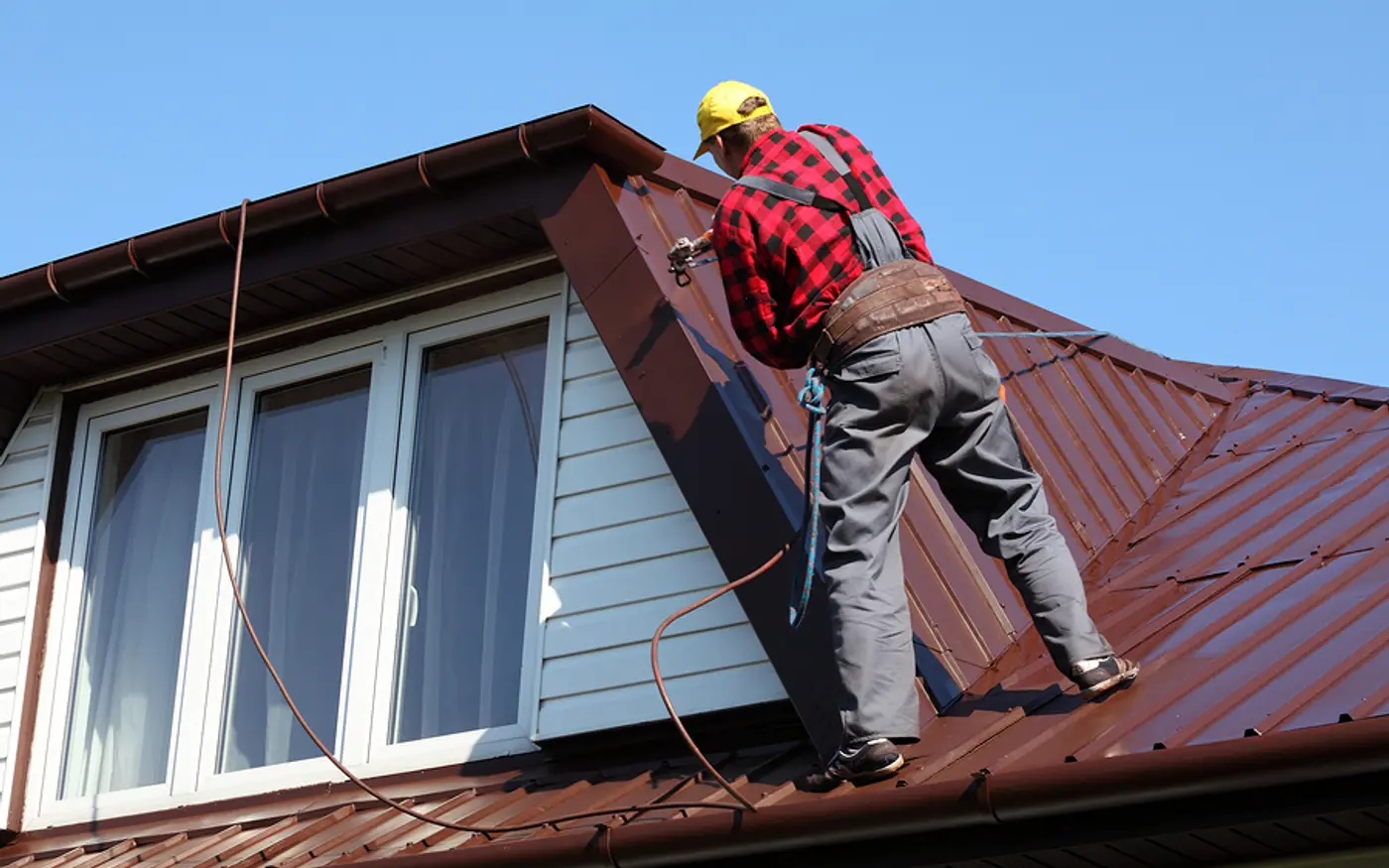
- We clean up and walk it with you. Metal shavings and screws are swept up so they don't stain the new finish, and we go over the finished roof with you.
Details that matter in St. Charles County
Both the City of St. Charles and unincorporated St. Charles County list an ultimate design wind speed of 107 mph and a "Severe" weathering rating in their residential code tables. St. Peters lists 115 mph. That wind number matters for metal: panels, clips and fasteners have to be spaced per the manufacturer's tested pattern, and edge and ridge zones get tighter attachment. Ground snow load is 20 psf, which properly installed metal sheds readily.
Neither the city nor the county requires an ice barrier underlayment, but freeze-thaw cycles here are real, with January lows in the low 20s. We still recommend self-adhered membrane in valleys, at penetrations and along low-slope sections, where water backs up first. The county's code amendments also make drip edge mandatory at both eaves and rakes on shingle roofs, and we finish metal roof edges with matching trim for the same reason: water has to be led off the roof edge, not into the fascia.
The International Residential Code does not allow a new roof covering over two or more existing layers, or over a water-soaked or deteriorated roof. Many older St. Charles homes have exactly that, which is one reason we generally tear off before installing metal rather than covering old shingles.
Hail deserves an honest word. The National Weather Service documented 3- to 3.75-inch hail over St. Charles County on March 14, 2024, and 2.75-inch hail near St. Charles on May 26, 2024. Metal panels won't crack and let water in the way a bruised shingle can, but stones that size can dent them. Heavier gauges and ribbed or textured profiles hide dents better than wide flat pans. Our St. Charles County hail history lays out the storms.
What drives the cost
National figures from HomeAdvisor put the average standing seam roof around $19,000, with a typical range of about $9,400 to $32,600. Those are national averages, not our prices. The real number for your house comes from things we can only see in person:
- System. Exposed-fastener panels cost less than standing seam.
- Gauge and finish. Heavier steel and premium paint systems cost more.
- Roof shape. Every valley, hip, dormer and chimney means cut panels and hand-bent flashing.
- Tear-off and decking. Layers to remove and how much decking is damaged.
- Pitch and access. Steep roofs and tight lots take more time and staging.
For a side-by-side look at lifespan, hail behavior and cost against shingles, read our guide to metal roofs vs. architectural shingles.
Metal roofs in St. Charles neighborhoods and towns
Historic districts: check the guidelines first
The city's six local historic districts treat metal differently. Frenchtown's design guidelines list documented original materials, asphalt, fiberglass or wood shingles, slate and synthetic slate as replacements, and metal is not on that list. The Commons guidelines, by contrast, name standing seam metal as acceptable. Either way, changing a roof's material changes its exterior appearance, which generally needs a Certificate of Appropriateness from the Landmarks Board. A request to install a new metal roof on a house on N. Seventh St. went before the board in 2018 after being tabled the month before, which shows these requests do get reviewed. If you live in Frenchtown or another local district, call the preservation planner before choosing metal. Our historic home roofing page covers the process.
Metal also has real history here. The National Register nomination for the Midtown neighborhood records standing seam metal and pressed-metal shingles on homes, alongside slate and asbestos-cement shingles. If you have one of those older metal roofs in Midtown or Lindenwood, repairing or matching it can be the right call.
Permits when you change materials
In St. Peters, the city's re-roofing requirements say a permit is needed when the roof covering changes to a different material, so a switch from shingles to metal should be confirmed with the St. Peters Building Department before work starts. In the City of St. Charles, replacing shingles is permit-exempt, but a material change is a different job; call Community Development at 636-949-3222. In unincorporated areas, check with County Building & Code Enforcement at 636-949-7345.
Rural and river-bottom properties
North of the city, around Orchard Farm, pole barns and outbuildings commonly carry metal roofs, and many need panel replacement or new fasteners. Near the rivers in Portage des Sioux and West Alton, open ground means more wind exposure, so attachment schedules matter even more. In the county's regulated floodplain, St. Charles County requires a floodplain development permit for reroofing even when no building permit is needed.
In Weldon Spring, large, steep, brick-fronted homes sometimes use standing seam as an accent over porches and bay windows, paired with shingles on the main roof.
Related services and next steps
If you're deciding between metal and other materials, we'll quote more than one option so you can compare. Many homeowners end up choosing between standing seam and stone-coated steel, or between metal and a full roof replacement with architectural shingles. For shops, offices and low-slope buildings, see commercial roofing. Call (636) 242-5111, 8am to 8pm, seven days a week, or use the quote form, and we'll set up a time to look at your roof.
Frequently Asked Questions
How long does a metal roof last in St. Charles?
InterNACHI estimates a metal roof lasts roughly 40 to 80 years, compared with about 30 years for architectural asphalt shingles. Where a given roof lands in that range depends on the panel type, the metal and its coating, how well the flashing and fasteners were installed, and how much hail and wind it sees. Exposed-fastener panels need their screws checked over time, while standing seam systems need less routine attention.
What is the difference between standing seam and exposed-fastener metal roofing?
Standing seam panels are joined by raised seams and held down with concealed clips or fasteners, which lets the metal expand and contract with temperature without stressing the screws. Exposed-fastener panels are screwed straight through the face of the panel with rubber-washered screws. They cost less, but those screws and washers need periodic inspection and replacement. For most homes, standing seam is the better long-term choice.
Can I put a metal roof on my house in Frenchtown?
It depends on the district and the board. Frenchtown's design guidelines list asphalt, fiberglass and wood shingles, slate and synthetic slate as replacement materials, and metal is not on that list. Because a change of roofing material alters the exterior appearance, it generally needs a Certificate of Appropriateness from the Landmarks Board. Talk with the city's preservation planner before you commit to metal on a Frenchtown home.
Will hail dent a metal roof?
It can. Metal does not crack the way an asphalt shingle can, and many metal panels are tested to UL 2218 Class 4, but large hail can leave cosmetic dents, especially on thinner panels and flat pans. The National Weather Service documented hail of 3 to 3.75 inches over St. Charles County on March 14, 2024. Heavier-gauge panels and a profile with ribs or texture hide dents better than a wide flat panel.
Is a metal roof loud when it rains?
Installed over solid roof decking with underlayment, as residential metal roofs are, a metal roof is usually not much louder than shingles from inside the house. The drumming people remember comes from metal panels fastened over open framing on barns and sheds, with nothing underneath to absorb the sound. Attic insulation helps further. We install residential metal over solid decking.
Do I need a permit to switch from shingles to metal?
It depends on where you live. St. Peters' re-roofing requirements say a permit is needed when the roof covering changes to a different material, so confirm with the St. Peters Building Department. The City of St. Charles exempts replacing roof shingles from permits, but switching materials is a different job, so call Community Development at 636-949-3222. Historic district homes may also need Landmarks Board approval.
How much does a metal roof cost?
National figures from HomeAdvisor put the average standing seam roof around $19,000, with a typical range of roughly $9,400 to $32,600. Those are national numbers, not our prices. Your cost depends on roof size and pitch, panel type and gauge, the number of valleys, chimneys and walls to flash, and whether old layers and damaged decking have to come off. We give a free written quote after we look at the roof.