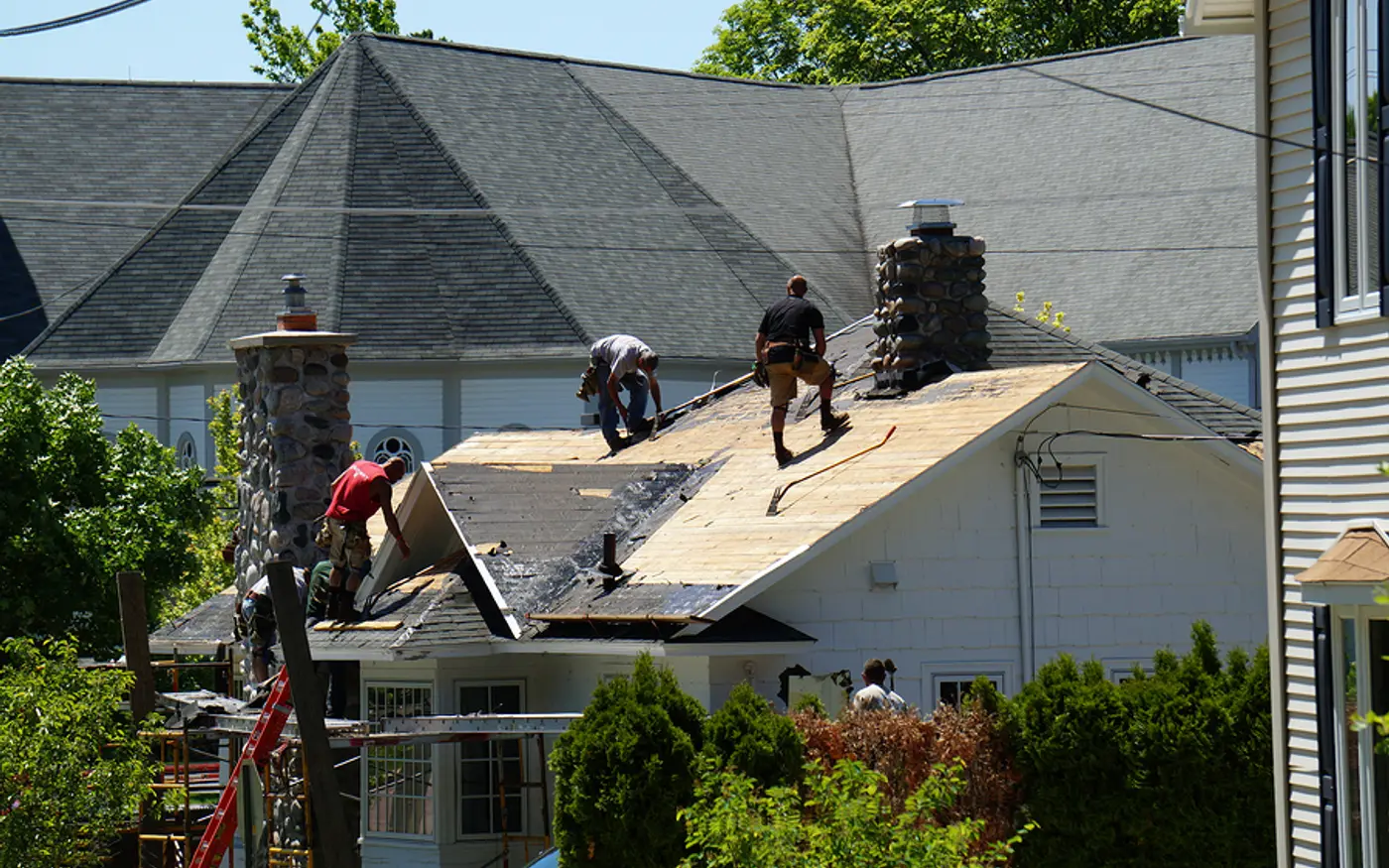
Fiberglass shingles are asphalt shingles built on a glass-fiber mat, and today they are essentially the only asphalt shingle sold, in both flat 3-tab and thicker architectural styles. St. Charles Roofing Designs installs both on St. Charles homes, garages and additions to code and manufacturer instructions, and gives free written quotes. Call (636) 242-5111, 8am to 8pm, seven days a week.
What "fiberglass shingle" actually means
Every asphalt shingle has a core mat that holds the asphalt and the mineral granules on top. For decades that mat was "organic": felt made from paper or other cellulose fibers, saturated with a lot of asphalt. Starting in the 1970s, manufacturers switched to mats of glass fibers. Fiberglass shingles had overtaken organic ones by about 1982, and the last organic shingle maker stopped production in 2011.
So "fiberglass shingles" isn't a premium upgrade or a niche product. It describes nearly every asphalt shingle on the market, including the architectural shingles on most new roofs in St. Charles County. When someone quotes you a "fiberglass roof," the more useful questions are which style (3-tab or architectural), which wind and impact ratings, and what goes under it.
Fiberglass vs. the old organic mat
| Organic (felt) mat | Fiberglass mat | |
|---|---|---|
| Status | No longer made (last producer quit in 2011) | The current standard |
| Weight | Heavier, more asphalt | Lighter for the same coverage |
| Moisture | Mat can absorb water, which leads to curling and blistering | Glass fibers don't absorb water |
| Fire resistance | Generally lower | Typically higher fire ratings |
| Flexibility in cold | More flexible | Stiffer, so handling and installation temperatures matter more |
| Standard | None current | ASTM D3462 |
This matters if your home still has an older roof. A roof put on before 2011 could have organic shingles, especially one from the 1970s or early '80s. Badly curled organic shingles are a common reason an older roof needs replacing rather than patching.
ASTM D3462
The residential code requires asphalt shingles to meet ASTM D3462, the standard for glass-felt shingles surfaced with mineral granules. It covers basics like mat weight, asphalt content, tear strength and pliability. Think of it as a floor for quality. Wind ratings (ASTM D7158 or D3161) and impact ratings (UL 2218) are separate tests printed separately on the wrapper.
3-tab vs. architectural: both fiberglass
The real choice is between styles. A 3-tab shingle is a single flat layer with two cutouts, so each strip shows three equal tabs and the roof has a uniform, brick-like pattern. An architectural shingle bonds two or more layers, so it's thicker and heavier and casts shadow lines that look more like shake.
| 3-tab fiberglass | Architectural fiberglass | |
|---|---|---|
| Construction | Single layer | Two or more laminated layers |
| Look | Flat, uniform tabs | Dimensional, shake-like |
| Expected life (InterNACHI) | About 20 years | About 30 years |
| Wind ratings | Generally lower | Generally higher |
| Hiding deck flaws | Shows dips and waves | Hides minor irregularities |
| Up-front cost | Lower | Higher |
That's why most whole-roof replacements in St. Charles County now use architectural shingles. Many 1980s and '90s homes in Harvester and St. Peters were built with 3-tab, and their second roof is usually architectural.
When 3-tab still makes sense
3-tab shingles are still made, and there are good reasons to choose them:
- Matching a repair. If most of your 3-tab roof is sound and one section was damaged, matching 3-tab keeps the look consistent.
- Garages, sheds and outbuildings. A detached garage or shed often doesn't justify a heavier shingle.
- Tight budgets or short ownership. If you're selling soon or need a sound roof for the lowest up-front cost, 3-tab is an honest option.
- Style on older homes. Some older and historic homes look more correct with a flat, low-profile shingle than a heavily textured one.
The downsides are real too. 3-tab has a shorter expected life, usually lower wind ratings, fewer colors, and it shows hail bruising and wind lift sooner. We'll lay out both options side by side in your quote.
Signs your shingle roof needs attention
- Curling, cupping or blistered shingles (common on aging organic roofs)
- Bare spots where granules have washed off, or granules piling up in gutters
- Missing tabs after a windstorm, or tabs that flap because the seal strip has let go
- Cracked or bruised shingles after hail
- Stains on ceilings, or daylight or damp decking visible from the attic
A few bad tabs can often be handled with a roof repair. Widespread wear usually means it's time for a roof replacement. If hail caused the damage, see our storm and hail damage page. We document what we find with dated photos you can share with your insurer.
How we install a fiberglass shingle roof
- Look before we quote. We check the roof and attic, count layers, and note whether existing shingles are organic or fiberglass.
- Tear off and repair decking. Code forbids a new layer over two or more existing layers. We strip to the deck and replace damaged boards.
- Drip edge and underlayment. Drip edge at eaves and rakes, as the county amendment requires. Underlayment goes over the drip edge at the eaves and under it at the rakes.
- Protect valleys and penetrations. Self-adhered ice and water membrane at valleys, chimneys, vents and low-slope sections. Code doesn't require it here, but that's where leaks begin.
- Flashing and ventilation. New step flashing and counterflashing at walls and chimneys, new pipe boots, and balanced intake and exhaust ventilation.
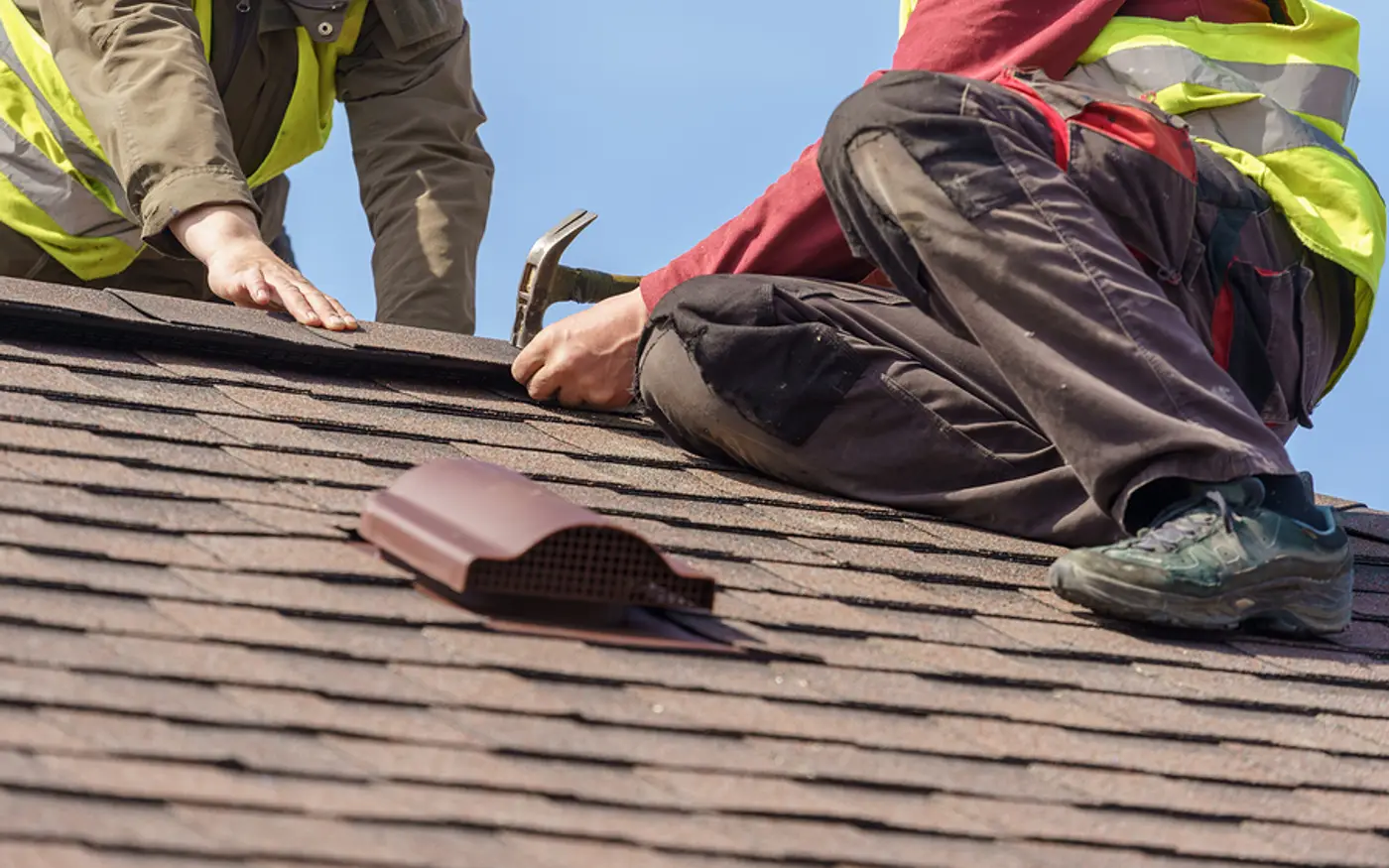
- Shingles to the manufacturer's instructions. Correct starter, nail count and placement, and installation temperatures matter with stiffer fiberglass shingles in cold weather.
- Cleanup and walk-through. We clear nails and debris and go over the finished roof with you.
Code and climate details in St. Charles County
The City of St. Charles enforces the 2021 IRC, and unincorporated areas use the 2021 St. Charles County Residential Code. Both list "Severe" weathering, 107 mph design wind, and no code requirement for ice barrier underlayment. St. Peters uses 115 mph. Asphalt shingles of any style need at least a 2:12 slope, with double underlayment from 2:12 up to 4:12. That rule often comes up on low back porches and additions on older homes, and anything flatter than 2:12 needs a low-slope roofing system instead of shingles.
Weather here is hard on shingles. The National Weather Service counts 40 to 50 thunderstorm days a year in the St. Louis area, and it documented hail up to 3.75 inches over St. Charles County on March 14, 2024. Summers bring 35 to 40 days at 90°F or more, and winters bring regular freeze-thaw. Thin 3-tab shingles show that wear sooner, which is part of why we usually recommend architectural for a full roof.
"Fiberglass" tells you the mat. What you really need to choose is the style, the ratings, and what goes under it.
Cost factors
3-tab costs less than architectural for the material, but labor, tear-off, decking, flashing and ventilation make up much of any roof's price, so the gap on the total job is smaller than on the shingles alone. Roof size, pitch, number of layers, decking condition and complexity drive the rest. National cost guides put an average asphalt roof replacement around $9,500, with a range from about $5,800 to $46,000. These are national figures, not our prices. Our guide to roof costs in St. Charles explains what moves the number, and we give a free written quote after we've seen the roof.
Shingle roofs across our service area
Near our office, in Frenchtown, the city's design guidelines list asphalt and fiberglass shingles among acceptable replacement materials. The South Main guidelines call low-profile asphalt shingles an appropriate replacement for wood shingles, which can make a flatter shingle the better fit there. A change in appearance may need Landmarks Board approval, so call the city's preservation line first. Our historic home roofing page goes deeper. In Midtown and Lindenwood, steep Queen Anne and bungalow roofs are mostly asphalt today. Out in Orchard Farm and north St. Charles County, 3-tab is still a sensible choice for garages and outbuildings, though reroofing in the regulated floodplain needs a county floodplain development permit.
Not sure which shingle fits your house? Call (636) 242-5111 or send a quote request. We'll look at the roof and give you a free written quote with both options priced.
Frequently Asked Questions
Are fiberglass shingles the same as asphalt shingles?
Yes, for practical purposes. A fiberglass shingle is an asphalt shingle built on a mat of glass fibers instead of the old paper-felt organic mat. Fiberglass overtook organic shingles in the early 1980s, and the last organic maker stopped production in 2011, so essentially every asphalt shingle on the market today, whether 3-tab or architectural, is a fiberglass-mat shingle.
Are 3-tab shingles discontinued?
No. 3-tab fiberglass shingles are still manufactured, though most homeowners now choose architectural shingles for a new roof. 3-tab remains useful for matching an existing 3-tab roof during a repair, for garages and outbuildings, for tight budgets, and for older homes where a flat, low-profile shingle suits the style. Color and line choices are narrower than for architectural shingles.
How long do 3-tab fiberglass shingles last?
InterNACHI estimates about 20 years for 3-tab shingles, compared with about 30 for architectural. In St. Charles County, summer heat, freeze-thaw cycles and hail can shorten that, and poor attic ventilation shortens it further. A thin single-layer 3-tab shingle also tends to show hail bruising and wind damage sooner than a thicker laminated shingle.
How can I tell if my old roof has organic shingles?
If your roof was installed before 2011, it could have organic-mat shingles, especially if it dates to the 1970s or early '80s. Organic shingles are heavier and often show curling, blistering and cracking as they age. The surest way to tell is to look at a torn edge or the back of a shingle. We can usually tell on the roof and will note it when we look at your roof.
What does ASTM D3462 mean on a shingle wrapper?
ASTM D3462 is the standard specification for asphalt shingles made from glass felt and surfaced with mineral granules. It sets requirements for things like mat weight, asphalt content, tear strength and pliability. The residential code requires asphalt shingles to meet it. It is a baseline for quality, not a wind or impact rating, which come from separate tests.
Can I put fiberglass shingles over my old shingles?
Code bans a new layer over two or more existing layers, and over a roof that is water-soaked or deteriorated. Even with one existing layer, a tear-off is usually the better choice because it lets us replace bad decking and install drip edge and underlayment correctly. Overlaying old, curled organic shingles in particular gives the new shingles an uneven base.
Do 3-tab shingles hold up to St. Charles wind?
They can, when the product's wind rating suits the site and they are nailed to the manufacturer's pattern. St. Charles County and the City of St. Charles use a 107 mph design wind speed, and St. Peters uses 115 mph. Architectural shingles generally carry higher wind ratings than 3-tab, which is one reason they dominate re-roofs here. We check the rating against your address.