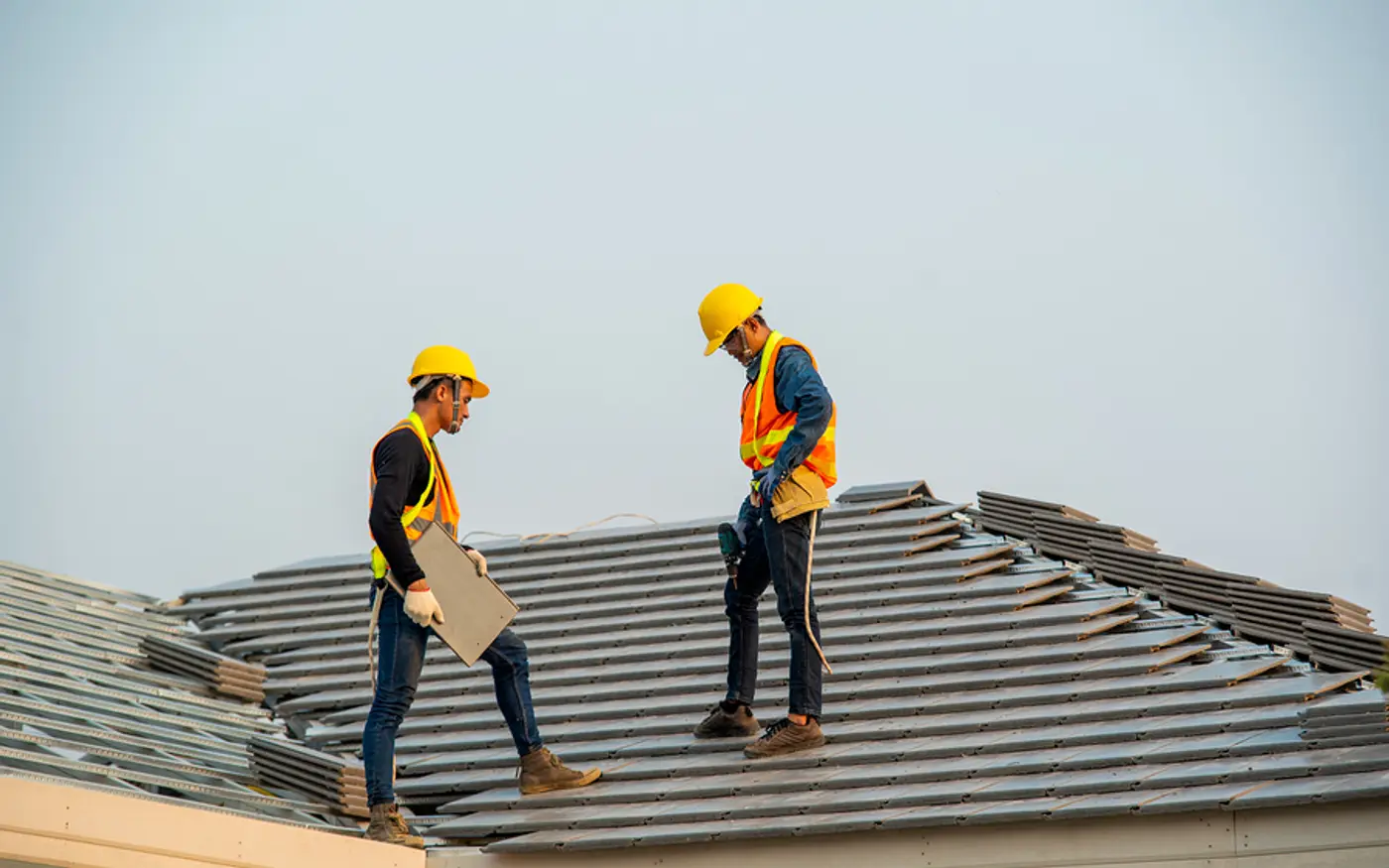
A roof inspection tells you what condition your roof is in before a leak or a storm decides for you. St. Charles Roofing Designs inspects roofs across St. Charles and nearby St. Charles County towns, photographs the shingles, flashing, edges, vents and attic, and explains plainly whether the roof needs nothing, a repair or a replacement. Call (636) 242-5111 to set a time.
Why a roof inspection matters here
A roof can look fine from the driveway and still be close to failing. Hail bruises, cracked pipe boots, lifted flashing and soft decking rarely show from the ground, and by the time a stain reaches the ceiling, water has usually been getting in for a while.
St. Charles County is hard on roofs. The county's code table rates our weathering as "Severe." Winters swing above and below freezing, summers bring 35 to 40 days of 90-degree heat, and the National Weather Service counts 40 to 50 thunderstorm days a year in the St. Louis area. Missouri ranked second in the country for State Farm hail claims in 2025, behind only Texas. A regular look at the roof is the cheapest way to keep a small problem small.
When to get your roof inspected
- After a hail or wind storm, even if you don't see damage from the ground.
- Once a year, ideally in spring after freeze-thaw season and before the storm months.
- When your roof turns 15 to 20 years old, to plan a replacement on your schedule instead of after a leak.
- Before buying or selling a home, so the roof isn't a surprise at closing.
- When you see a stain, drip or shingle debris, to find the cause, not just the symptom.
- Before choosing a new roof, to know the layer count, decking condition and ventilation you'll be working with.
What we check
We get on the roof where it's safe to walk and into the attic where we can reach it. Here's what we look at and photograph.
Shingles and roof surface
Curling, cracking, blistering and granule loss on each slope; hail bruises, where impacts knock off granules and can fracture the mat underneath; creased or missing shingles from wind; and how many layers are on the roof. Under IRC R908.3.1.1, a roof with two or more layers has to be torn off before re-roofing, so the layer count affects future costs.
Flashing and penetrations
Step flashing and counterflashing at walls and chimneys, skylight curbs, pipe boots, box vents and exhaust caps. These are where most leaks start. On brick homes, we check whether chimney counterflashing is set into the mortar or just glued to the face with sealant.
Valleys, edges and gutters
Worn or poorly cut valleys, and whether there's drip edge at the eaves and rakes as the county code requires on new roofing work. Rotted fascia and the first row of decking often point to missing drip edge. We also note gutter damage, since dented gutters and downspouts are a common sign of hail.
Decking and structure
Soft or spongy spots underfoot, sagging between rafters, and on older homes with board decking, gaps wide enough to matter for a future re-roof.
Attic and ventilation
Water stains, daylight through the boards, mold or frost on the sheathing, and whether intake and exhaust ventilation are balanced. Poor attic ventilation cooks shingles from below in our summers and feeds ice dams and condensation in winter.
How an inspection works
- You call or send the form. Tell us about the roof's age, any leaks, and any recent storms.
- We look at the roof in person. On the roof where it's safe, in the attic where we can get in, and around the exterior for gutter, vent and siding clues.
- We photograph what we find. Dated photos of each slope and every problem, so you're not taking our word for it.
- We explain it plainly. What's normal wear, what needs attention now, and what can wait.
- You get a free written quote if work is needed. A roof repair if the roof is sound, or a roof replacement if it's at the end of its life. If it needs nothing, we'll say so.
If your roof doesn't need anything, the most useful thing we can tell you is exactly that.
Hail inspections in St. Charles County
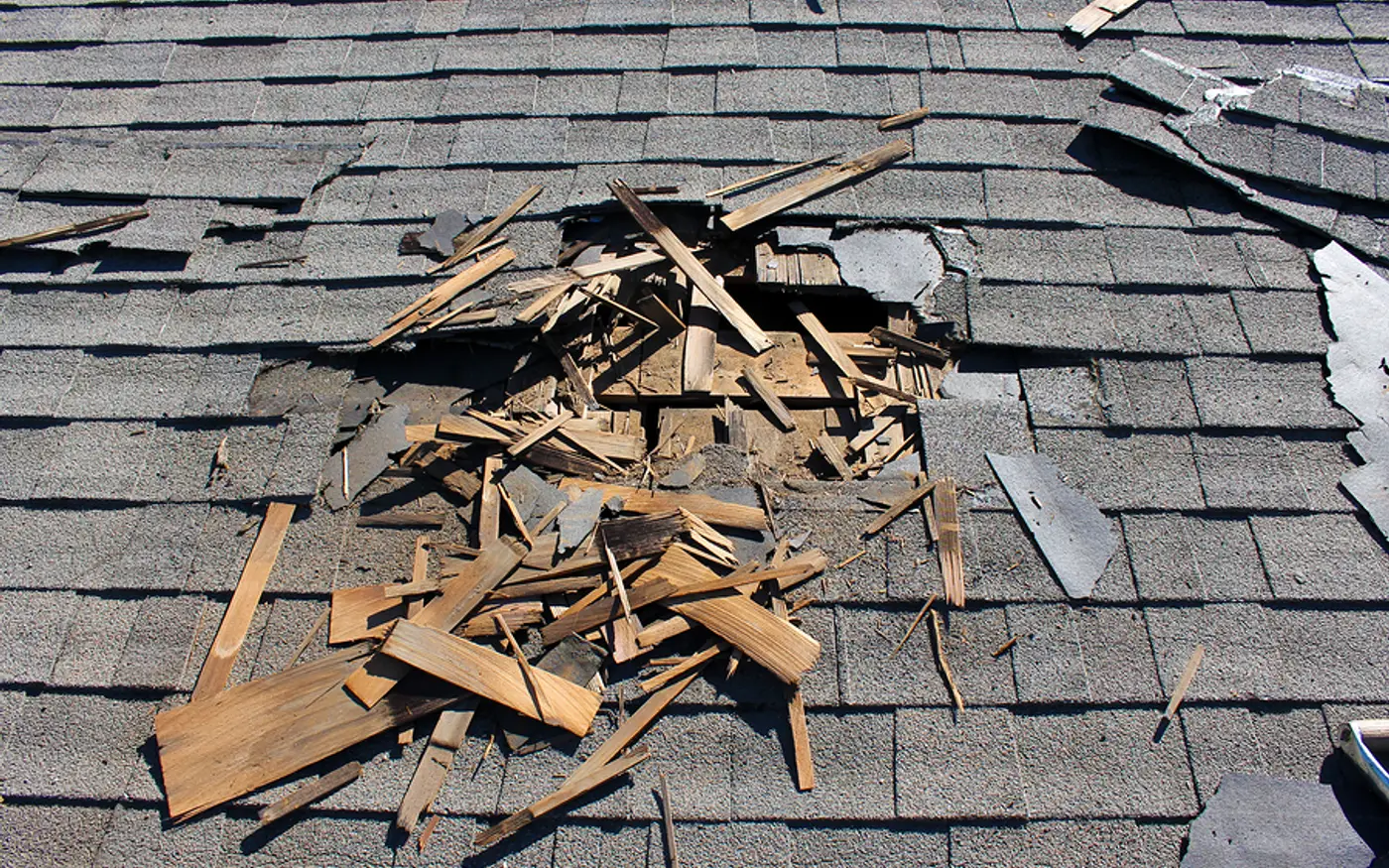
Hail is the main reason people call us for an inspection. The National Weather Service documented supercells over St. Charles County on March 14, 2024 that produced hail of 3 to 3.75 inches, with 3-inch hail photographed in O'Fallon. On May 26, 2024, the largest hail reported was 2.75 inches near St. Charles, with 2 to 2.5-inch hail elsewhere in the county. Back on April 28, 2012, golf-ball to baseball-size hail fell across the county. Our St. Charles County hail history lists the major events.
Hail damage isn't always visible, and it isn't always obvious on newer, impact-rated shingles either. Independent testing by IBHS in 2025 found that even Class 4 shingles aren't hail-proof. That's why we look at every slope and photograph what we find. If the damage is real, our storm and hail damage roof repair page explains what comes next.
Under Missouri's RSMo 407.725, a roofer may not offer to pay or rebate any part of your deductible, must give you a written notice of your right to cancel before you sign, and must refund your payments within 10 days if you cancel after your insurer denies the claim in writing. See the statute on the Missouri Revisor of Statutes site.
Inspections and insurance
An inspection doesn't decide a claim. That's between you and your insurer. What it does is give you evidence. We document what we find with dated photos you can share with your insurer, and you'll know whether you're looking at storm damage or normal wear before you decide to file.
It also helps to know your policy. Many Missouri policies use a wind and hail deductible of 1% or 2% of dwelling coverage; the Missouri Department of Commerce and Insurance gives the example of a 2% deductible on a $100,000 home being $2,000. The DCI also warns that on an actual cash value policy, a 20-year-old roof may pay as little as 20% of the cost to replace it. Its "Raising the Roof" comparison tool compares how the state's larger insurers cover roofs. Check your declarations page.
What we see on roofs around St. Charles
Historic homes near downtown
In Frenchtown and along Historic Main Street, inspections focus on parapet walls, coping, chimney flashing and the joints where gallery and porch roofs meet the main roof. In Midtown and Lindenwood, we may find slate, pressed-metal shingles or asbestos-cement shingles, which need proper handling if they're ever removed. If you're thinking about a material change on a home in one of the city's local historic districts, our historic home roofing page explains the Certificate of Appropriateness review.
Subdivisions from the 1970s to the 1990s
In St. Peters and Harvester, many homes date from the 1970s, '80s and '90s and are on their second or third roof. We check layer count closely there, since a second layer means a mandatory tear-off next time.
Newer neighborhoods
In New Town at St. Charles, the first roofs from 2004 onward are approaching 20 years old. On younger roofs, inspections usually look for storm damage and builder-grade details like undersized ventilation.
River-bottom and rural properties
Out toward Orchard Farm and the north county, we see open wind exposure, farmhouses, and metal-roofed outbuildings. The National Weather Service confirmed an EF-0 tornado on a 6-mile track in northwestern St. Charles County on Nov. 4–5, 2024, with minor roof damage to homes.
Schedule your roof inspection
Whether it's after a storm, before a sale, or because your roof is getting up in years, call (636) 242-5111. We're open 8am to 8pm, seven days a week. If the roof needs work, we'll give you a free written quote. Business owners can ask about our commercial roofing inspections for flat and low-slope roofs.
Frequently Asked Questions
How often should I have my roof inspected in St. Charles County?
A good rule is once a year, ideally in spring after freeze-thaw season and before the heaviest storm months, plus after any storm with large hail or high wind. Roofs over about 15 years old and roofs with a history of leaks deserve a closer look. Catching a cracked pipe boot or lifted flashing early is far cheaper than repairing a rotted deck later.
How can I tell if hail damaged my roof from the ground?
Often you can't, which is why an on-roof inspection matters. Clues on the ground include dents in gutters, downspouts and metal vents, dings in siding or window screens, shingle granules piled at the downspouts, and damaged cars or patio furniture. On the roof, hail leaves dark bruises where granules were knocked off and the mat underneath may be cracked. Don't climb onto the roof yourself.
What do I get after a roof inspection?
You get dated photos of what we found, including the shingles on each slope, flashing at chimneys, walls and vents, the edges, and the attic where we can reach it, along with a plain explanation of what each issue means. If the roof needs work, you get a free written quote for the repair or replacement. If it doesn't, we'll tell you that.
Should I get a roof inspection before buying a house?
Yes, especially on older homes. A general home inspector may look at the roof from the ground or a ladder, while a roofer gets on it and into the details: layer count, flashing, decking softness and remaining shingle life. Knowing a roof has two layers or needs replacing soon can change your offer. In St. Charles historic districts, it also helps to know what materials are on the roof before you buy.
Can an inspection help with an insurance claim?
An inspection gives you evidence. We document what we find with dated photos you can share with your insurer, so you know whether storm damage is likely before you decide to file. Many Missouri policies use a wind and hail deductible of 1% or 2% of dwelling coverage, so it helps to know whether the damage is worth a claim. Missouri's Department of Commerce and Insurance also publishes guidance on roof coverage.
What is roof algae and is it damaging my roof?
The dark streaks common on north-facing slopes here are usually Gloeocapsa magma, an airborne algae that feeds on limestone filler in shingles. According to the Asphalt Roofing Manufacturers Association, it is mostly cosmetic. It doesn't usually mean the roof is failing, though heavy moss or debris holding moisture is a different story. Algae-resistant shingles with copper granules are an option when you replace.