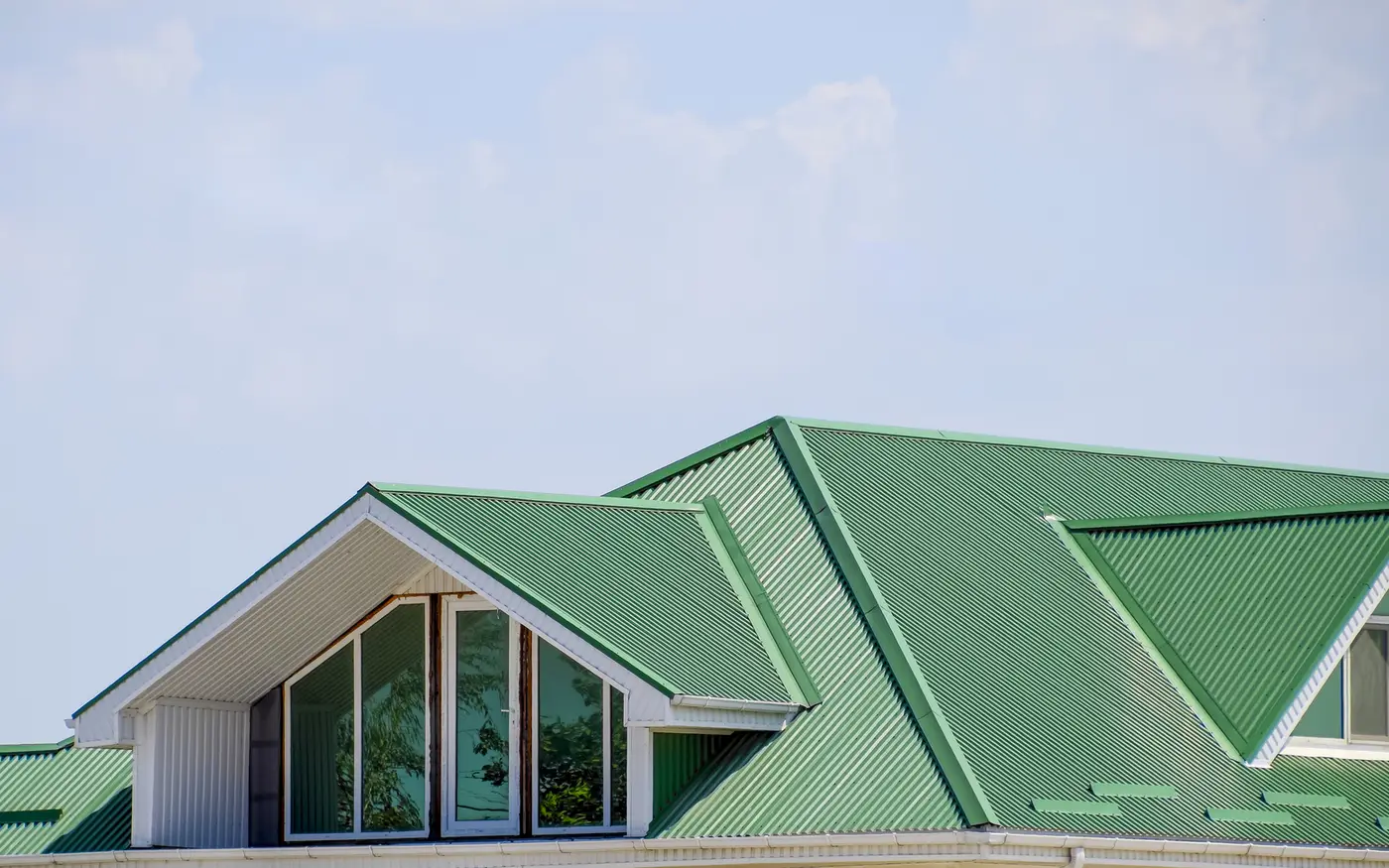
For most St. Charles homeowners, architectural shingles cost far less up front and last about 30 years, while a metal roof costs more but can last roughly 40 to 80 years, according to InterNACHI estimates. Metal handles hail and low slopes better; shingles fit the Frenchtown, South Main and Commons design guidelines. St. Charles Roofing Designs quotes both, free and in writing, after looking at your roof.
The short version
Architectural shingles are the default roof in St. Charles County for good reason: they are affordable, every roofer knows how to install them, they come in impact-rated versions, and the Frenchtown, South Main and Commons design guidelines all accept asphalt shingles. Metal is the long-term play. It costs more on day one, but it can outlast two shingle roofs, it handles low-slope sections that shingles can't, and it sheds hail without cracking. The right choice usually comes down to how long you'll own the house, what your roof looks like, and where the house sits.
Side-by-side comparison
| Factor | Architectural shingles | Metal (standing seam) |
|---|---|---|
| Typical lifespan (InterNACHI estimate) | About 30 years | Roughly 40 to 80 years |
| National cost reference | Angi: average roof replacement about $9,500, range about $5,800 to $46,000 | HomeAdvisor: average about $19,000, typical $9,400 to $32,600 |
| Minimum slope | 2:12, with double underlayment from 2:12 to 4:12 | Standing seam systems can go lower, within the panel maker's limits |
| Hail behavior | Can bruise, crack and lose granules; impact ratings up to UL 2218 Class 4 | Won't crack; large hail can dent; many panels tested to Class 4 |
| Wind ratings | ASTM D7158 classes D (90 mph), G (120) and H (150), or ASTM D3161 Class F | Depends on panel, clip spacing and fastening pattern |
| Maintenance | Low; watch flashing, boots and granule loss | Standing seam low; exposed-fastener screws need periodic checks |
| Historic districts | Listed as acceptable in Frenchtown, South Main and Commons guidelines | Listed in Commons guidelines; not listed in Frenchtown's |
The cost figures are national averages from third-party cost guides, collected for comparison only. They are not our prices, and real roofs in St. Charles County land all over those ranges depending on size, pitch, tear-off and decking condition.
Lifespan and long-term cost
InterNACHI estimates architectural asphalt shingles last about 30 years and metal roofs roughly 40 to 80 years. That gap is the whole financial case for metal. If you're 40 and plan to stay in the house, a metal roof installed now might be the last roof you buy. Architectural shingles over the same stretch would likely mean a second full tear-off and replacement.
The math flips if you're moving soon. National cost guides put a standing seam roof at roughly double the national average asphalt replacement, and buyers rarely pay dollar-for-dollar for remaining roof life. For a five- to ten-year horizon, a well-installed architectural shingle roof is usually the better use of money. Our breakdown of what a new roof costs in St. Charles walks through the factors that move either number.
The real question isn't which roof is better; it's how many years you need the roof to last.
Hail: the St. Charles County factor
Hail is the reason this comparison comes up so often here. State Farm reported that Missouri ranked second in the nation for its hail claims in 2025, behind only Texas. Locally, the National Weather Service documented hail of 3 to 3.75 inches from supercells over St. Charles County on March 14, 2024, with 3-inch hail photographed in O'Fallon. On May 26, 2024, the NWS recorded hail up to 2.75 inches near St. Charles and 2 to 2.5 inches elsewhere in the county. Our St. Charles County hail history collects more of these events.
How shingles fail in hail
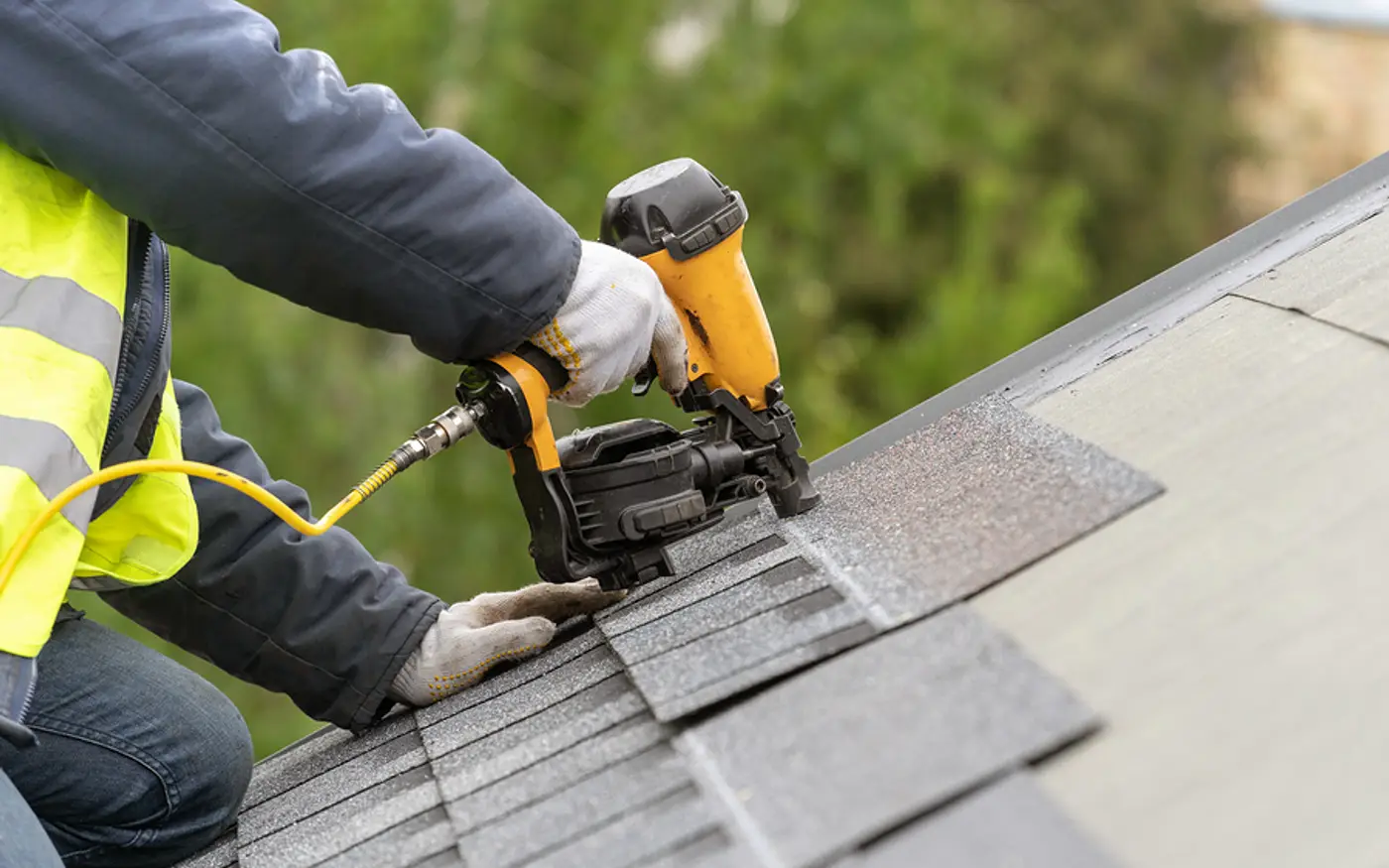
Hail bruises asphalt shingles, cracks the mat, and knocks off the granules that protect the asphalt from sunlight. Impact-resistant shingles rated UL 2218 Class 4 survived a 2-inch steel ball dropped 20 feet in testing, and some insurers offer discounts for Class 3 or Class 4 roofs. But in 2025 the Insurance Institute for Business & Home Safety tested 24 impact-resistant shingle products, representing about 95% of the market; most rated "Good" and none rated "Excellent." Class 4 is better, not hail-proof. Our Class 4 vs. Class 3 shingle guide explains the ratings.
How metal fails in hail
Metal doesn't crack or shed granules. Its weakness is denting. Moderate hail may leave small dimples that are cosmetic; stones of 2.5 inches and up, like those in the 2024 storms, can leave visible dents in thinner panels and wide flat pans. Heavier gauges and ribbed profiles hide dents better. A dented metal panel usually keeps shedding water, while a fractured shingle can start a leak, but cosmetic dents can still matter at resale and to your insurer. Some policies treat cosmetic damage to metal roofs differently, so read your declarations page and policy language before you choose.
If hail resistance with a traditional look is the priority, stone-coated steel sits between the two: steel panels with a granule finish pressed into shingle, shake or tile profiles. DECRA's published warranty covers hail up to 2.5 inches. That is a strong threshold, but it is smaller than the largest stones the NWS documented over the county in March 2024.
Standing seam vs. exposed-fastener metal
"Metal roof" covers two very different products. Standing seam panels lock together at raised seams and are held by concealed clips, which let the metal expand and contract with Missouri's temperature swings without loosening fasteners. Exposed-fastener panels are screwed through the face with rubber-washered screws. They cost less, but the screws and washers need periodic inspection and replacement to stay watertight. On a house, the fair comparison against architectural shingles is standing seam. Exposed-fastener panels make more sense on barns, sheds and shops.
Code and installation details that apply to both
- Wind. The City of St. Charles and unincorporated St. Charles County design for 107 mph; St. Peters designs for 115 mph. Shingles need the right wind class and nailing pattern; metal needs the manufacturer's clip and fastener spacing.
- Layers. The IRC bans a new roof over two or more existing layers or over a deteriorated roof. Either material may mean a full tear-off.
- Ice barrier. Neither the city nor the county requires it, but we recommend self-adhered membrane in valleys, at penetrations and on low-slope sections under either material.
- Drip edge. County amendments require drip edge at eaves and rakes on shingle roofs; metal uses matching edge trim for the same job.
- Low slopes. Shingles need at least 2:12. A shallow porch or rear addition is often where metal earns its place even on a shingled house.
Historic districts and permits in St. Charles
This is where St. Charles differs from most suburbs. The city has six local historic districts, and changing a roof's material generally needs a Certificate of Appropriateness from the Landmarks Board, because it changes the exterior appearance. The design guidelines don't treat metal the same way everywhere. Frenchtown's guidelines list documented original materials, asphalt, fiberglass or wood shingles, slate and synthetic slate as acceptable replacements, and metal is not on the list. The Commons guidelines include standing seam metal among acceptable roofing. The board does see these requests: a June 2018 Landmarks Board agenda included a request to install a new metal roof on a house on N. Seventh St., an item tabled the month before.
So in Frenchtown, architectural shingles in a historic color like gray, black or brown are the straightforward path, and metal means a conversation with the preservation planner first. In the National Register neighborhoods of Midtown and Lindenwood, which are not among the six local districts, a reroof generally doesn't trigger local review, but it's worth confirming. Our guide to replacing a roof in a St. Charles historic district covers the process.
Permits matter too. The City of St. Charles lists replacing roof shingles as a project that generally doesn't need a permit, but a switch to a different material is a different job, so call Community Development at 636-949-3222. In St. Peters, the city's re-roofing requirements say a permit is needed when the roof covering changes to a different material; confirm with the St. Peters Building Department before work starts. Our St. Charles County roof permit guide goes town by town.
Which roof fits which house
Architectural shingles usually win when
- You plan to sell within roughly ten years.
- The roof is cut up with many valleys, dormers and hips, which raise metal costs sharply.
- The house is in Frenchtown or another district whose guidelines favor shingles.
- Budget is the main constraint.
Metal usually wins when
- You plan to stay for decades.
- The roof is a simple gable or has low-slope sections.
- You've already replaced shingles after hail and want fewer replacements ahead.
- It's a barn, shop or outbuilding, common in the rural north county around Orchard Farm.
What to do next
Start with the roof you have. If it's storm-damaged, a roof inspection will tell you whether a repair buys time or whether it's time for a full roof replacement. When it is time, we'll quote architectural shingles and metal roofing side by side, with photos of what we found. Call (636) 242-5111, 8am to 8pm, seven days a week, or use the quote form.
Frequently Asked Questions
Is a metal roof worth it compared to architectural shingles?
It depends mostly on how long you will own the house. InterNACHI estimates metal roofs last roughly 40 to 80 years and architectural shingles about 30. National cost guides put standing seam well above asphalt, so the extra life pays off mainly for owners who stay for decades. If you plan to sell within about ten years, architectural shingles usually make more financial sense.
Which handles hail better, metal or architectural shingles?
Metal generally handles hail better because it does not crack or lose granules the way asphalt does, though large stones can dent it. Shingles are sold in impact ratings up to UL 2218 Class 4, but IBHS testing in 2025 found most impact-resistant shingles rated only Good, none Excellent. Neither material is hail-proof against the 3 to 3.75-inch hail the National Weather Service documented over St. Charles County in March 2024.
Can I put a metal roof on a house in a St. Charles historic district?
Sometimes. Frenchtown's design guidelines list asphalt, fiberglass and wood shingles, slate and synthetic slate as replacement materials and do not list metal, while the Commons guidelines name standing seam metal as acceptable. A change of material generally needs a Certificate of Appropriateness from the Landmarks Board in any of the city's six local districts. Call the city's preservation planner before deciding.
Does switching from shingles to metal need a permit?
It can. St. Peters' re-roofing requirements say a permit is needed when the roof covering changes to a different material, so confirm with the St. Peters Building Department. The City of St. Charles lists replacing roof shingles as permit-exempt, but a material change is a different job, so call Community Development at 636-949-3222. In unincorporated areas, check with County Building and Code Enforcement at 636-949-7345.
Can a metal roof go over my existing shingles?
The International Residential Code does not allow a new roof covering over two or more existing layers, or over a water-soaked or deteriorated roof. Even where one layer would technically permit it, we generally recommend tearing off first so the decking can be checked and repaired and the metal sits on a flat, solid surface. Hidden soft decking is common on older St. Charles roofs.